

When it comes to securing lockers in a hospital, there are numerous factors to consider. As a combination lock supplier, I've often been asked whether a combination lock can be used on a locker in a hospital. In this blog post, I'll explore the feasibility, advantages, and potential drawbacks of using combination locks in a hospital locker setting.
Feasibility of Using Combination Locks in Hospitals
Hospitals are unique environments. They house a large number of staff, patients, and visitors, and security is of utmost importance. Lockers are used by hospital employees to store personal belongings, work - related items, and sometimes even sensitive medical information.
Combination locks can indeed be a viable option for hospital lockers. One of the primary reasons is the ease of use. Unlike traditional key - based locks, combination locks don't require the user to carry around a physical key. This is especially beneficial in a hospital setting where employees are often on the move, attending to patients, and may misplace or lose keys easily.
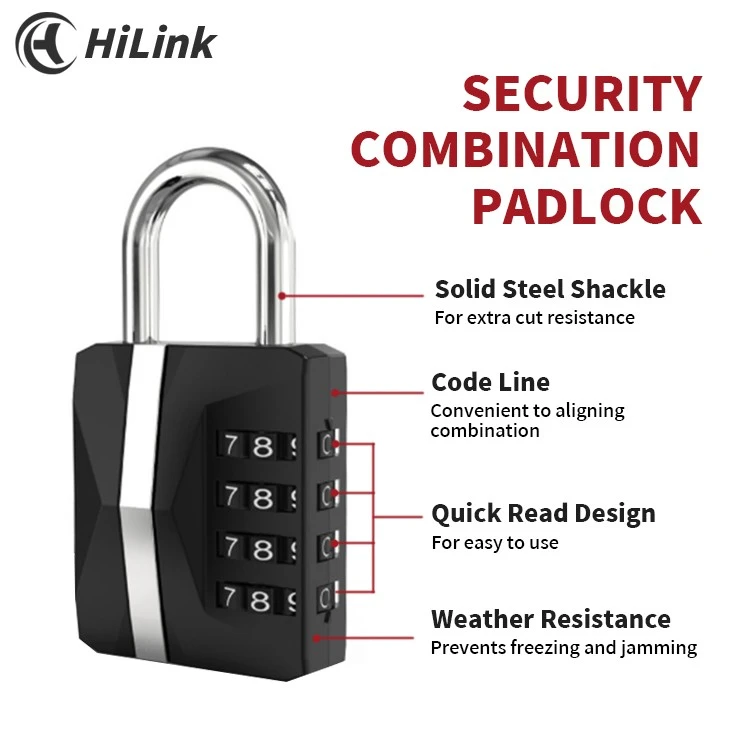
Another aspect of feasibility is the security they offer. Modern combination locks, such as the 4 - Digital Combination Padlock, come with a wide range of possible combinations. This makes it extremely difficult for unauthorized individuals to guess the code and gain access to the locker.
Advantages of Using Combination Locks
1. Convenience
As mentioned earlier, the convenience factor is a major advantage. Hospital staff members can quickly open and close their lockers without having to fumble for a key. This is particularly useful during busy shifts when time is of the essence. For example, a nurse who needs to quickly grab a change of scrubs during a break can easily do so by entering the combination code.
2. No Key Management Issues
Hospitals have to deal with a large number of keys if they use traditional locks. Key management can be a hassle, including key duplication, key tracking, and the risk of keys falling into the wrong hands. With combination locks, there are no keys to duplicate or misplace. Each user can set their own unique combination, and if an employee leaves the hospital, the combination can be easily reset.
3. Hygiene
In a hospital environment, hygiene is a top priority. Keys can harbor bacteria and viruses as they are passed from hand to hand. Combination locks, on the other hand, can be easily cleaned. Many modern combination locks are made of materials that can be wiped down with disinfectants, reducing the risk of cross - contamination.
4. Cost - Effective
Over time, combination locks can be more cost - effective than traditional locks. There is no need to constantly replace lost keys or re - key locks. Once the initial investment in the combination lock is made, the ongoing costs are minimal.
Potential Drawbacks
1. Memory Issues
One of the main drawbacks of combination locks is that users may forget their combination. In a hospital setting, where employees are often under stress and dealing with a lot of information, this can be a real problem. However, many combination locks have a reset feature that allows the lock to be opened with a master code or by following a specific reset procedure.
2. Limited Security in Some Cases
While combination locks offer a certain level of security, they are not completely foolproof. If a person observes someone entering their combination code, they can gain unauthorized access. In a busy hospital locker room, it may be difficult to ensure that no one is watching when a user enters their code.
3. Power - Dependent Locks
Some advanced combination locks are electronic and require batteries. If the batteries run out, the lock may not be accessible. In a hospital, this can be a significant problem, especially if it happens during an emergency. However, there are also non - electronic combination locks available that do not have this issue.
Considerations for Hospital Administrators
When deciding whether to use combination locks on hospital lockers, hospital administrators should take several factors into account.
First, they need to assess the level of security required. If the lockers are used to store highly sensitive information or valuable items, they may need to choose a more secure type of combination lock or implement additional security measures.
Second, they should consider the training needs of the staff. Employees need to be trained on how to set and reset their combination codes, as well as what to do if they forget their code.
Finally, administrators should ensure that the combination locks are compatible with the existing locker infrastructure. Some locks may require modifications to the lockers, which can add to the cost.
Our Combination Lock Offerings
As a combination lock supplier, we offer a wide range of products suitable for hospital lockers. Our 4 - Digital Combination Padlock is a popular choice. It has a simple yet effective design, with four digits that offer a large number of possible combinations. The lock is made of high - quality materials that are durable and easy to clean, making it ideal for a hospital environment.
We also offer other types of combination locks, including electronic and mechanical options. Our team can provide guidance on which type of lock is best suited for your hospital's specific needs.
Conclusion
In conclusion, combination locks can be a suitable option for hospital lockers. They offer many advantages in terms of convenience, security, hygiene, and cost - effectiveness. However, there are also some potential drawbacks that need to be considered. Hospital administrators should carefully evaluate their needs and choose the right combination lock solution.
If you're a hospital administrator or part of a hospital procurement team and are interested in learning more about our combination locks, we'd love to hear from you. Contact us to discuss your requirements and start a procurement negotiation. We're committed to providing high - quality combination locks that meet the unique needs of your hospital.

References
- "Hospital Security Best Practices", Journal of Hospital Administration
- "Hygiene in Healthcare Facilities", International Journal of Hygiene and Environmental Health
- "Cost - Benefit Analysis of Locking Systems in Hospitals", Healthcare Financial Management Review


