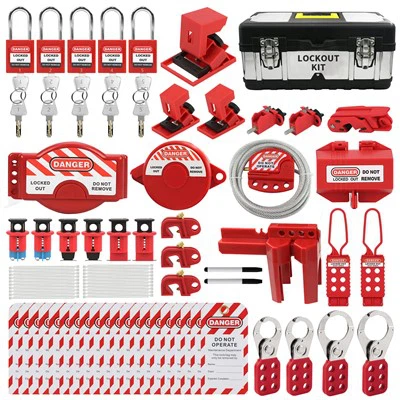
As a cable lockout supplier, I've received numerous inquiries about the applicability of cable lockouts in marine equipment. This blog post aims to comprehensively explore whether cable lockouts can be used for marine equipment, delving into the key considerations, benefits, and potential limitations.
Understanding Cable Lockouts
Before we dive into the marine - specific applications, let's briefly understand what cable lockouts are. Cable lockouts are safety devices designed to prevent the accidental or unauthorized operation of equipment. They typically consist of a strong cable and a locking mechanism. Our company offers a variety of cable lockouts, including the Multi - Function Cable Lockout, Plastic Coating Steel Cable Lockout, and Plastic Seal Lockout. These lockouts are used across different industries to ensure equipment safety during maintenance, repair, or shutdown periods.
Marine Equipment and Safety Requirements
Marine equipment operates in a harsh and challenging environment. It includes engines, pumps, winches, and other machinery on ships, boats, and offshore platforms. Safety is of utmost importance in the marine industry due to the high - risk nature of the work and the potential for catastrophic consequences in case of equipment failure.
The safety requirements for marine equipment are governed by various international and national regulations. These regulations mandate the use of proper lockout - tagout (LOTO) procedures to protect workers from unexpected startup of equipment. LOTO procedures involve isolating energy sources and applying lockouts to prevent the release of stored energy.
Suitability of Cable Lockouts for Marine Equipment
Advantages
- Versatility: Cable lockouts are highly versatile. They can be used to secure a wide range of equipment controls, valves, and switches on marine vessels. For example, they can be wrapped around the handles of valves to prevent accidental opening or closing. The adjustable length of the cable allows for customization to fit different equipment sizes and shapes.
- Ease of Use: Marine workers are often required to perform tasks quickly and efficiently. Cable lockouts are relatively easy to install and remove, which makes them suitable for the fast - paced nature of marine operations. Workers can easily apply a cable lockout during a maintenance break and remove it once the work is completed.
- Visibility: Many cable lockouts are brightly colored, which enhances their visibility on the equipment. In the marine environment, where there is a lot of activity and noise, the high - visibility nature of cable lockouts helps to ensure that workers are aware of the locked - out equipment.
Challenges
- Corrosion Resistance: The marine environment is highly corrosive due to the presence of saltwater, humidity, and harsh weather conditions. Standard cable lockouts may not be suitable if they are not made of corrosion - resistant materials. However, our Plastic Coating Steel Cable Lockout is designed to withstand corrosion. The plastic coating protects the steel cable from rust and degradation, making it a viable option for marine use.
- Strength and Durability: Marine equipment is often subject to high levels of vibration, shock, and mechanical stress. Cable lockouts need to be strong enough to withstand these forces without breaking or coming loose. Our cable lockouts are made from high - strength materials that can endure the harsh conditions of the marine environment.
Considerations for Using Cable Lockouts in Marine Applications
- Material Selection: As mentioned earlier, corrosion resistance is crucial. In addition to plastic - coated steel cables, stainless - steel cables can also be a good choice. The locking mechanism should also be made of corrosion - resistant materials such as brass or stainless steel.
- Compatibility with Equipment: Before using a cable lockout on marine equipment, it is important to ensure that it is compatible with the equipment's controls and energy sources. For example, the cable should be able to securely wrap around the valve handle or switch without interfering with its normal operation.
- Training and Compliance: Workers need to be properly trained on the use of cable lockouts in the marine environment. They should understand the LOTO procedures and how to correctly apply and remove the lockouts. Compliance with relevant regulations is also essential to avoid legal issues.
Case Studies
Let's take a look at a few case studies to illustrate the successful use of cable lockouts in the marine industry.
Case Study 1: A Shipping Company
A large shipping company was facing issues with unauthorized operation of pumps on its vessels. They implemented a cable lockout program using our Multi - Function Cable Lockout. The cable lockouts were used to secure the pump controls during maintenance. As a result, the number of accidental pump startups decreased significantly, and the safety of the workers improved.


Case Study 2: An Offshore Platform
An offshore platform had a problem with valves being opened or closed accidentally, which could lead to oil spills or other environmental disasters. By using cable lockouts on the valve handles, the platform operators were able to prevent unauthorized valve operation. The high - visibility cable lockouts also made it easy for workers to identify the locked - out valves.
Limitations and Precautions
- Limited Security for High - Security Applications: While cable lockouts are effective for most general - purpose applications, they may not provide sufficient security for high - security equipment on marine vessels. For example, critical control systems on a naval ship may require more advanced locking mechanisms.
- Regular Inspection: Cable lockouts need to be inspected regularly for signs of wear and tear. In the marine environment, the harsh conditions can accelerate the degradation of the lockouts. Any damaged or worn - out lockouts should be replaced immediately to ensure their effectiveness.
Conclusion
In conclusion, cable lockouts can be a suitable option for marine equipment when selected and used correctly. Their versatility, ease of use, and visibility make them a valuable addition to the safety toolkit in the marine industry. However, it is essential to consider factors such as corrosion resistance, strength, and compatibility with equipment.
If you are in the marine industry and are looking for reliable cable lockouts, we are here to help. Our range of cable lockouts, including the Multi - Function Cable Lockout, Plastic Coating Steel Cable Lockout, and Plastic Seal Lockout, is designed to meet the specific needs of marine applications. Contact us to discuss your requirements and start a procurement negotiation. We are committed to providing high - quality safety solutions for your marine equipment.
References
- International Maritime Organization (IMO) Safety Regulations
- Occupational Safety and Health Administration (OSHA) Lockout - Tagout Standards
- Industry reports on marine equipment safety