

In the industrial realm, safety and reliability are of paramount importance, especially when it comes to the operation of valves. Butterfly valves are widely used in various industries due to their simple structure, quick operation, and relatively low cost. However, to ensure that these valves are used safely and effectively, valve lockout devices play a crucial role. One key aspect of these lockout devices is their shock resistance, which directly impacts their performance and durability in different working environments.
Understanding Butterfly Valve Lockout
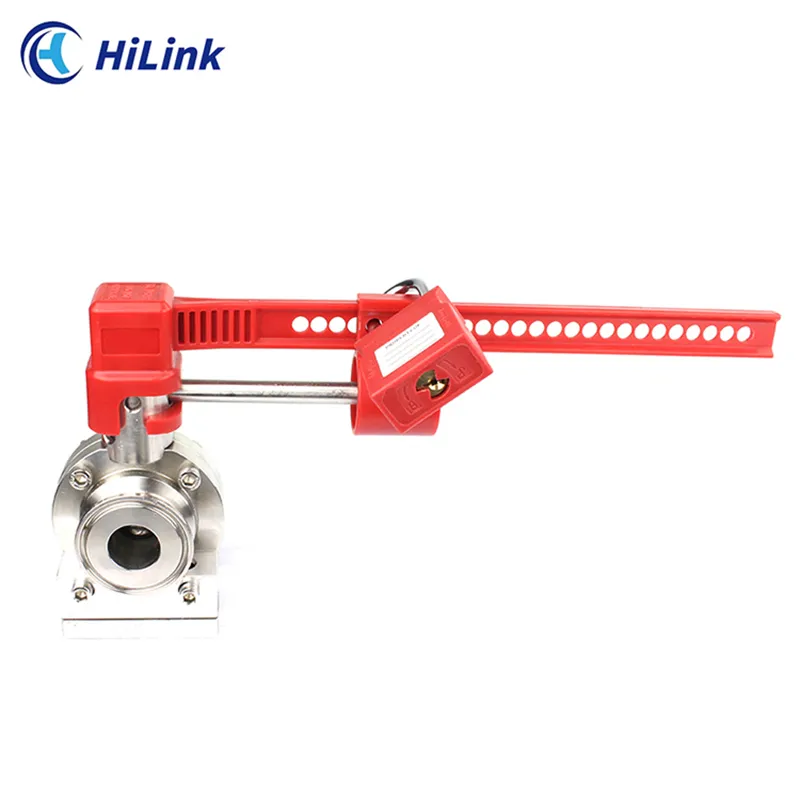
Before delving into the shock resistance of butterfly valve lockouts, it's essential to understand what they are. A butterfly valve lockout is a safety device designed to prevent unauthorized operation of a butterfly valve. It physically restricts the movement of the valve handle, ensuring that the valve remains in a specific position (either open or closed) until the lockout is removed by an authorized person. This is particularly important in industries where accidental valve operation can lead to serious safety hazards, environmental pollution, or production disruptions.
As a supplier of butterfly valve lockouts, we offer a diverse range of products to meet the needs of different industries. Our product portfolio includes Pull Handle Butterfly Valve Lockout, Safety Butterfly Valve Lockout, and Adjustable Sanitary Butterfly Valve Lockout. Each of these products is designed with specific features to ensure optimal performance and safety.
The Significance of Shock Resistance
Shock resistance is a critical characteristic of butterfly valve lockouts. In industrial settings, these lockouts are often exposed to various forms of mechanical shock, such as vibrations from nearby machinery, impacts during installation or maintenance, and sudden pressure changes within the pipeline. A lockout device with poor shock resistance may fail to maintain its locking function under these conditions, leading to potential safety risks.
For example, in a manufacturing plant where heavy machinery is in operation, the continuous vibrations can gradually loosen the locking mechanism of a valve lockout. If the lockout is not shock-resistant, it may eventually release the valve handle, allowing the valve to be accidentally operated. This could result in the release of hazardous substances, damage to equipment, or even endanger the lives of workers.
In a chemical processing plant, sudden pressure surges in the pipeline can create a significant impact on the valve and its lockout. A shock-resistant lockout can withstand these pressure changes without losing its locking ability, ensuring that the valve remains in the desired position and preventing any potential leaks or spills.
Factors Affecting Shock Resistance
Several factors contribute to the shock resistance of a butterfly valve lockout. The material used in the construction of the lockout is one of the most important factors. High-quality materials such as stainless steel, reinforced plastics, and hardened alloys are commonly used to ensure durability and resistance to shock. These materials have excellent mechanical properties, including high strength, toughness, and corrosion resistance, which enable the lockout to withstand the forces generated by shocks and vibrations.
The design of the lockout also plays a crucial role in its shock resistance. A well-designed lockout should have a stable and robust structure that can distribute the impact forces evenly. For example, some lockouts feature a multi-point locking mechanism that provides a more secure hold on the valve handle, reducing the risk of the lockout being dislodged by shocks. Additionally, the shape and size of the lockout should be optimized to minimize the effects of vibrations and impacts.
The manufacturing process is another factor that affects shock resistance. Precision manufacturing techniques ensure that the components of the lockout are accurately machined and assembled, resulting in a tight fit and a reliable locking mechanism. Quality control measures during the manufacturing process also help to identify and eliminate any potential defects that could compromise the shock resistance of the lockout.
Testing Shock Resistance
To ensure the shock resistance of our butterfly valve lockouts, we conduct rigorous testing procedures. These tests simulate the real-world conditions that the lockouts may encounter in industrial applications. One common test method is the drop test, where the lockout is dropped from a specified height onto a hard surface to evaluate its ability to withstand impacts.
We also perform vibration tests using specialized equipment to simulate the continuous vibrations that occur in industrial environments. During these tests, the lockout is subjected to different frequencies and amplitudes of vibrations for a specified period of time. After the tests, we inspect the lockout for any signs of damage or loosening of the locking mechanism.
In addition to these physical tests, we also use computer simulations to analyze the stress distribution and deformation of the lockout under shock and vibration conditions. This allows us to optimize the design and material selection of the lockout to improve its shock resistance.

Applications and Benefits
Our shock-resistant butterfly valve lockouts are suitable for a wide range of industries, including oil and gas, chemical processing, power generation, water treatment, and food and beverage. In the oil and gas industry, where the safety of personnel and the protection of the environment are of utmost importance, our lockouts ensure that valves are securely locked to prevent any accidental release of oil or gas.
In the chemical processing industry, our lockouts help to maintain the integrity of the pipeline system by preventing unauthorized valve operation. This reduces the risk of chemical spills and leaks, which can have serious environmental and health consequences.
The benefits of using our shock-resistant butterfly valve lockouts are numerous. Firstly, they provide a high level of safety by preventing accidental valve operation. This helps to protect workers, equipment, and the environment from potential hazards. Secondly, they improve the reliability of the valve system by ensuring that the valve remains in the desired position, reducing the risk of equipment damage and production disruptions. Finally, our lockouts are durable and long-lasting, which reduces the need for frequent replacements and maintenance, resulting in cost savings for our customers.
Conclusion
The shock resistance of a butterfly valve lockout is a crucial factor that determines its performance and reliability in industrial applications. As a supplier of butterfly valve lockouts, we are committed to providing high-quality products that meet the strictest safety standards. Our diverse range of shock-resistant lockouts, including Pull Handle Butterfly Valve Lockout, Safety Butterfly Valve Lockout, and Adjustable Sanitary Butterfly Valve Lockout, is designed to withstand the toughest working conditions.
If you are looking for reliable and shock-resistant butterfly valve lockouts for your industrial applications, we invite you to contact us for more information and to discuss your specific requirements. Our team of experts is ready to assist you in selecting the right lockout products for your needs.
References
- ASSE 1050 - Performance Requirements for Lockout/Tagout Devices
- OSHA 29 CFR 1910.147 - The Control of Hazardous Energy (Lockout/Tagout)
- ANSI/ASSE Z244.1 - Safe Practices for Lockout/Tagout


