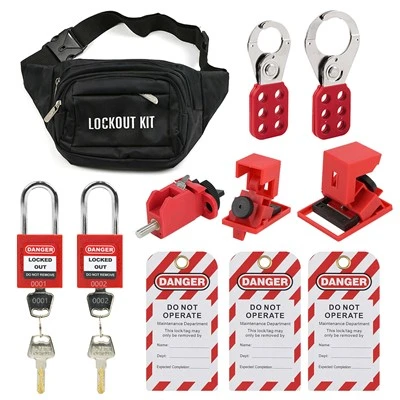
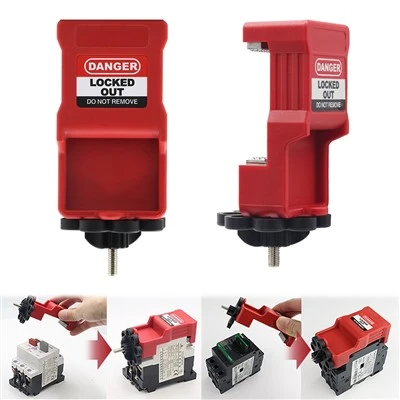
In a production environment, when forklift trucks break down, the proper use of lockout/tagout procedures ensures that the equipment can be repaired safely and effectively prevents accidents.
In this article, we will clearly demonstrate whether your company's forklift lockout and tagout procedures comply with OSHA regulations and, if not, how to rectify the situation.
Why is it necessary to establish a lockout/tagout procedure?
When equipment starts up unexpectedly, it can result in serious injury, amputation or even death-which is why the US Occupational Safety and Health Administration (OSHA) requires equipment owners to establish lockout/tagout procedures. A clear and concise set of lockout/tagout procedures protects employees throughout the site, as well as those working on malfunctioning machinery. Unfortunately, improper lockout/tagout practices consistently rank among OSHA's top ten most common violations year after year.
What are the lockout/tagout requirements of the US Occupational Safety and Health Administration (OSHA)?
Note: The following information provides an overview of OSHA requirements. We strongly recommend that you consult OSHA Standards 1910.147 and 1910.333. OSHA stipulates:
"Live parts to which workers may be exposed must be de-energised before workers perform work on them or in their vicinity. Safe de-energisation procedures must be established before de-energising circuits or equipment.
Circuits and equipment to be worked on must be disconnected from all power sources. Control circuit devices (such as push-buttons, selector switches and interlocks) must not be the sole means of de-energising circuits or equipment.
Stored electrical energy that may endanger persons must be discharged. Where stored electrical energy may endanger persons, capacitors must be discharged and high-capacitance components must be short-circuited and earthed.
Locking devices shall be installed… to prevent personnel from operating the disconnecting devices without the use of excessive force or tools.
Warning labels shall include a statement prohibiting unauthorised operation of the disconnecting devices and the unauthorised removal of the labels.
The employer shall retain a written copy of this procedure… and shall make it available for inspection by employees, the Assistant Minister for Labour and his authorised representatives."
Be aware of and avoid these three common lockout/tagout pitfalls
1. Simply removing the forklift key is not enough-merely removing the key does not constitute locking out the forklift (nor does using an interlock device). The power supply must be disconnected and any stored energy released. Failure to properly lock out and discharge a forklift has resulted in serious injuries to operators and technicians.
2. Ensure staff are informed - It is essential to train all relevant staff so they can identify hazardous energy sources and know where to find the lockout/tagout procedures. Document training, ensure team members know who to consult and where to seek help if issues arise, and arrange regular refresher training.
3. Never 'set and forget' – review the lockout/tagout procedures at least once a year. Conduct inspections, seek feedback from staff, and update documentation or provide refresher training as required.
Example of Forklift Lockout/Tagout Procedures
The following is an example of lockout/tagout procedures for your reference. Actual procedures should be tailored to the specific work tasks and equipment involved. For definitions, exceptions and requirements, please refer to the US Occupational Safety and Health Administration (OSHA) standards 29 CFR 1910.333 and 1910.147.
Step 1: Notify all staff on affected shifts of the equipment failure
Step 2: Shut down the equipment (include step-by-step instructions in the operating procedures) and disconnect all power sources
Step 3: Apply a lockout device and display a sign explaining why the forklift is out of service and who to contact in case of queries
Step 4: Release any residual energy (e.g. discharge capacitors)
Step 5: Attempt to start the equipment to ensure it is completely deactivated
Step 6: Have repairs carried out by authorised personnel
Step 7: Follow the above steps in reverse order to return the equipment to service.
HiLink is your one-stop safety lockout tagout solution expert!