For many companies, procuring Lockout/Tagout (LOTO) equipment appears straightforward: simply select some safety padlocks, tags and locking devices, then draw up a list of safety equipment.
However, when it comes to practical application in the workplace, many safety managers find that the biggest problem stems not from a shortage of LOTO products, but from choosing the wrong ones.
Lockout devices that are incompatible with the equipment, padlocks that cannot withstand harsh environments, or incomplete kits that fail to cater for unexpected maintenance situations can all undermine the effectiveness of the entire LOTO programme.
Based on feedback from clients across various industries, certain common procurement issues are all too frequent.
1. Do You Need Individual LOTO Devices or a Complete LOTO Kit?
One of the first questions customers usually ask is:
"Should we buy individual lockout devices or a complete kit?"
The answer depends on the maintenance environment.
For large manufacturing plants, purchasing individual devices may be more suitable because they already have an established LOTO inventory and only need replacement parts.
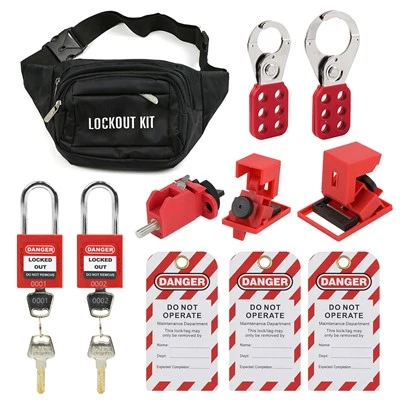
However, for small and medium-sized facilities, electrical contractors, and maintenance teams, a complete LOTO kit is often a better choice.
A properly designed kit can provide:
·Common circuit breaker lockouts
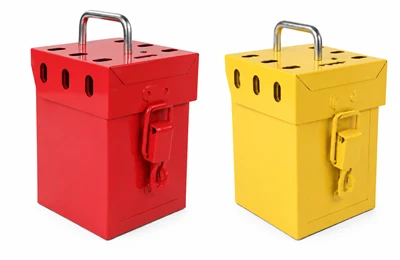
·Lockout hasps for group maintenance
·Basic accessories for daily maintenance work
Many customers initially purchase individual components to reduce cost but later find that they need additional accessories during maintenance operations. A complete kit helps avoid repeated purchases and reduces preparation time.
A good LOTO kit is not about having the most products. It is about having the right products for common maintenance situations.
2. How to Choose the Right LOTO Padlock?
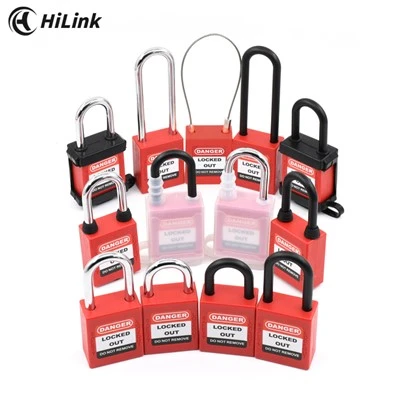
A LOTO padlock is not simply a smaller version of a normal padlock.
During purchasing, customers often focus only on color and price, but several technical details are more important.
Non-conductive body vs metal body
For electrical maintenance applications, non-conductive nylon or reinforced plastic bodies are commonly preferred.
Advantages include:
·Reduced risk during electrical maintenance
·Lightweight design for workers carrying multiple locks
·Better resistance to certain industrial environments
Metal padlocks may provide higher physical strength in some applications, but they are not always the best choice for electrical lockout procedures.
Key retention vs non-key retention
Another common question is:
"Should we choose key-retaining or non-key-retaining LOTO padlocks?"
Key retention means the key cannot be removed while the lock is open.
This design helps prevent workers from accidentally leaving equipment unlocked during maintenance.
However, some facilities prefer traditional non-key-retaining locks because of their existing safety procedures.
The right choice depends on the company's LOTO policy and working environment.


3. Why Do Some Lockout Devices Fail During Use?
A frequent complaint from customers is:
"Why does the lockout device not fit my equipment?"
The reason is usually not product quality, but incorrect selection.
Different equipment requires different lockout solutions.
For example:
·Different circuit breakers require different breaker lockouts.
·Large electrical panels may require adjustable devices.
·Group maintenance requires lockout hasps instead of individual locks.
·Valve systems require specific valve lockout devices.
Before purchasing, companies should check:
1.Equipment manufacturer and model
2.Size and shape of energy isolation points
3.Number of workers involved in maintenance
4.Working environment conditions
A simple compatibility check before purchasing can prevent most application problems.
4. Common Mistakes When Buying LOTO Products
Choosing based only on price
The lowest-cost LOTO products may look attractive, but frequent replacement and poor compatibility can increase long-term costs.
For safety products, durability and reliability are usually more important than initial purchase price.
Buying too many unnecessary accessories
Another common mistake is purchasing oversized LOTO kits with many rarely used components.
A practical LOTO system should focus on:
·Frequently used devices
·Equipment compatibility
·Easy storage and transportation
A compact kit that workers actually use is often more effective than a large kit that stays in storage.
5. How to Maintain LOTO Equipment and Extend Service Life
Although LOTO products are designed for industrial environments, regular inspection is still necessary.
Recommended maintenance practices include:
Safety Padlocks
Check shackle damage regularly
Remove dust and industrial contaminants
Avoid forcing the key when the lock mechanism becomes stiff
Lockout Devices
Inspect cracks or deformation
Confirm adjustment mechanisms work properly
Replace damaged plastic components
Tags
Replace faded or damaged tags
Ensure warning information remains readable
Regular inspection not only extends product life but also ensures that workers trust and correctly use the equipment.
6. Customer Experience: What Professional Buyers Usually Consider
From discussions with maintenance teams and distributors, experienced buyers usually focus on three points:
1. Product Compatibility
A slightly higher-quality product that fits existing equipment is usually more valuable than a cheaper product that requires replacement.
2. Supplier Support
Professional buyers often need technical advice, product recommendations, and customized solutions rather than simply purchasing products.
3. Long-Term Supply Stability
For companies building their LOTO program, stable product quality and consistent supply are important because safety equipment is a long-term requirement.