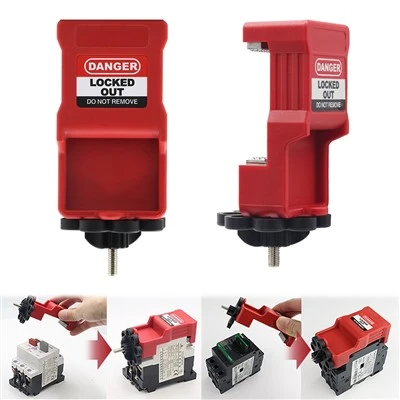
Every year, there are people who are injured or killed due to underestimating the stored energy or the equipment not being properly isolated. Lockout/tagout is the most effective measure system to prevent such accidents.
What is Lockout/Tagout (LOTO) ?
Lockout/Tagout (LOTO) is a process used to isolate dangerous energy sources (including electrical, mechanical, hydraulic, pneumatic, thermal, chemical, gravitational, etc.). Its purpose is to prevent the accidental release of energy during maintenance, inspection, or repair. This process ensures that the equipment cannot be energized until the work is completed and with the permission of authorized personnel through physical devices (locks, tags, labels) and formal procedures.
LOTO is a comprehensive system process: it is not a simple operation of a single lock on a machine. This system integrates planning, equipment, training, verification and supervision.
Why LOTO matters
Because preventing the uncontrolled release of energy can avoid serious injuries, deaths, production halts, legal risks and reputational damage, this is a morally and commercially correct approach.
core principles of the LOTO process
Identify all energy sources-primary and secondary. Omission of any renders the lockout procedure incomplete.
Isolate energy sources-close valves, switch off circuit breakers, drain pipes, prevent movement, etc.
Install safety locks-keys held solely by authorised personnel.
Display clear labels - indicating name, date/time, reason, and contact details.
Verify equipment status - attempt to operate controls; measure voltage or pressure where necessary.
Control energy storage devices - drain, block, restrain, or secure springs, pressure vessels, and capacitors.
Coordinate communication - ensure all affected personnel are aware of the status.
Only authorised personnel may release the lockout - unauthorised bypassing or delegation is strictly prohibited.
Step‑by‑step LOTO operate procedure
1. Preparatory Work
Confirm the equipment and all energy sources.
Notify affected personnel and supervisors of the shutdown plan.
2. Shutdown Procedure
Place the equipment in a safe shutdown state following standard procedures.
3. Isolation Measures
Physically isolate energy sources: open circuit breakers, close valves, disconnect circuits, and install isolation panels where necessary.
4. Lockout Tagout
Apply designated padlocks and tags at isolation points. Tags must display: name, department, date/time, reason for lockout, contact number.
Where multiple technicians are involved, each shall use an independent padlock. Utilise a collective lockout box or multi-padlock hook where required.
5. Release Stored Energy
Relieve pressure, discharge capacitors, secure moving parts, and anchor suspended loads.
6. Verify Isolation Status
Attempt to activate controls and measure energy (voltage tester, pressure gauge) to confirm zero energy.
Visually confirm equipment cannot move and no energy exists.
7. Perform Work
Carry out maintenance or repair tasks.
8. Prepare for Restoration
Inspect tools and ensure protective devices are reinstalled.
Clear personnel from the work area and confirm with affected employees.
9. Remove Devices and Restore Energy
Only the person who applied the lock may remove it. Follow prescribed collective unlocking procedures for collective locking.
Remove locks/tags, restore energy supply, and monitor equipment start-up.
10. Record and Archive
Document the lockout event: personnel involved, time, operation details, issues, and lessons learned.
Responsibility Division: Responsibilities of Different Roles
Authorized (LOTO) employees: Those who have received training and are authorized to carry out locking procedures and install/remove locking devices.
Affected employees: Those working on or near the equipment must be notified during the implementation of the locking procedures and maintain a safe distance.
LOTO coordinator/monitor: Ensures the existence of the procedures, personnel have received training, and audits are conducted.
Management: Provides resources, equipment, training, audits, and execution support.
Device and Good Practices
Use sturdy and non-replicable padlocks and mark the user's name.
Use weather-resistant, oil-resistant, and wear-resistant labels. The labels are only warning signs and cannot replace the locks.
Set up a power outage area near the working area, equip with general tools, padlock hooks, identification signs, and backup locks.
For complex systems, color-coding is required to distinguish energy types (electricity, hydraulic, pneumatic), and systematic isolation should be implemented.
HiLink offers comprehensive and professional LOTO devices!
Group lockouts and shift changes
For teamwork, use a multi‑lock hasp or a lockbox where each person applies an individual lock.
On shift changes, the outgoing person must remove their lock only after handing over and informing the incoming authorized person; use a formal handover checklist.
If an authorized person leaves without removing their lock, a documented verification and management approval process must be followed before removal.
Common mistakes & how to fix them
Mistake: Not identifying all energy sources. Fix: Require one formal step that lists every source and has a sign‑off.
Mistake: Tags without locks. Fix: Make locks mandatory tags alone are insufficient.
Mistake: Inadequate verification. Fix: Standardize verification methods (e.g., specific meter checks or pressure readings) and record them.
Mistake: Poor contractor coordination. Fix: Require contractor LOTO plans and single‑point coordination through the site LOTO coordinator.
continuous improvement
Conduct regular LOTO audits (monthly for high‑risk areas, quarterly otherwise).
Key indicators: number of LOTO procedures executed, near‑miss reports related to energy control, audit non‑conformities, and time to close corrective actions.
After any incident, run a root cause analysis focused on process failures (not just operator error).
HiLink is your one-stop safety lockout tagout solution expert!