In many manufacturing plants, Lockout/Tagout (LOTO) procedures have become an integral part of the safety system. Warning labels are affixed to machinery, staff have received safety training, and locking devices are provided.
However, workplace accidents still occur from time to time.
The reason for this is that effective LOTO involves more than simply fitting safety locks to switches. The real challenge lies in ensuring that every source of hazardous energy is properly controlled, that every employee is clear about their responsibilities, and that every procedure functions effectively under actual production conditions.
A comprehensive 'Lockout/Tagout' programme requires the seamless integration of equipment knowledge, employee behaviour and reliable safety devices.
LOTO requirements begin with an understanding of the equipment, not the locking devices
A common misconception in the manufacturing sector is that the LOTO process begins when an operator applies a lock.
In fact, the process begins much earlier.
Before selecting locking devices, organisations need to understand:
· Where energy enters the equipment
· How many isolation points there are
· Whether stored energy remains after shutdown
· Which employees may be at risk during maintenance
Modern production equipment is often far more complex than a simple power switch. A packaging line, a CNC machine tool or an automated assembly system may involve electrical circuits, pneumatic cylinders, hydraulic systems and mechanical movement all at the same time.
A reliable LOTO procedure must be devised around the equipment itself, rather than based on a generic checklist.
The biggestchallenge: controlling hidden energy sources
Many Lockout/Tagout (LOTO) procedures fail not because staff disregard safety rules, but because hidden energy sources are overlooked.
For example:
· Compressed air may remain trapped in pneumatic valves even after the main power supply has been cut off.
· Hydraulic systems may remain under pressure after being shut down.
· Raised machine components may fall due to uncontrolled gravitational potential energy.
· Capacitors may still store electrical energy after equipment has been isolated.
This is why professional Lockout/Tagout (LOTO) procedures require both isolation and verification.
A switch being locked out does not always mean that the machine is safe.
Practical LOTO Requirements for Modern Manufacturing Facilities
1. Develop equipment-specific energy control procedures
A common mistake is to use the same LOTO procedure for different machines.
However, the risks associated with each machine vary.
An effective energy control procedure should clearly define:
· Energy sources
· Isolation points
· Required locking devices
· Methods for releasing stored energy
· Verification steps
For manufacturers with multiple production lines, equipment-specific procedures help staff carry out LOTO operations more quickly and accurately.
2. Ensuring LOTO Equipment Is Easy to Use
Safety procedures are only effective if staff are able to follow them correctly.
If locking devices are difficult to fit, incompatible with the equipment or inconvenient to carry, workers may be tempted to take shortcuts.
Manufacturing plants should select LOTO products based on actual working conditions:
· Is the device suitable for the equipment in question?
· Can workers fit it quickly?
· Is it sufficiently conspicuous in a busy factory environment?
· Can it withstand dust, grease, chemicals or temperature fluctuations?
High-quality LOTO equipment should facilitate safety compliance rather than complicate operational procedures.
3. Treat collective locking as a specialised process
Large-scale maintenance projects often involve multiple employees working on the same machine.
In such situations, individual lockout procedures alone may not be sufficient.
Group lockout requirements:
· Each worker must be equipped with personal protective equipment
· Clear allocation of responsibilities
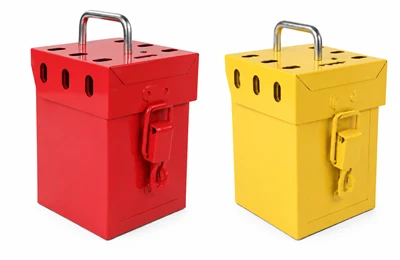
· Correct use of lockout hooks or group lockout boxes
The aim is to ensure that the equipment cannot be restarted until every worker has completed their task and removed their personal lock.
Why LOTO Compliance Often Fails During Real Production
A written procedure may look perfect on paper, but production environments create additional challenges.
Common problems include:
Production Pressure
When factories are under pressure to restart equipment quickly, workers may be tempted to skip verification steps.
Lack of Machine Updates
Equipment modifications or automation upgrades may change energy sources, but LOTO procedures are not always updated.
Poor Equipment Organization
If lockout devices are difficult to find, employees may delay or avoid proper isolation.
A successful LOTO program requires continuous improvement, not only initial training.
Building a Better LOTO Safety System
Manufacturing companies with strong safety performance usually focus on three areas:
Clear Procedures
Employees need practical instructions that match the actual equipment.
Proper Training
Training should include real machine scenarios instead of only classroom explanations.
Reliable Lockout Equipment
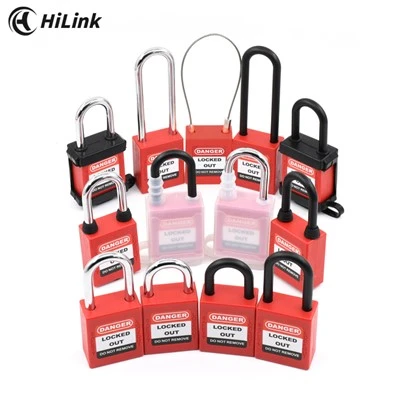
High-quality safety padlocks, electrical lockouts, valve lockouts, and lockout kits help employees perform isolation correctly.
LOTO is most effective when procedures, people, and equipment work together.
Choosing Professional Lockout Tagout Solutions for Manufacturing
For manufacturing facilities, LOTO products should be selected according to application requirements rather than price alone.
Important factors include:
·Material durability
·Lock visibility
·Environmental resistance
·Compatibility with different energy isolation points
·Ease of operation
The right lockout equipment can help companies improve safety compliance while making daily maintenance operations more efficient.