Al abordar el cumplimiento de los procedimientos de bloqueo y etiquetado (LOTO), la mayoría de las organizaciones suelen centrarse en la formación, los procedimientos escritos y la cantidad de candados de seguridad disponibles in situ. Aunque estos elementos son fundamentales, las investigaciones de accidentes y las auditorías de seguridad suelen poner de manifiesto otro problema:
El problema rara vez radica en la falta de dispositivos de bloqueo. En la mayoría de los casos, se debe a que los trabajadores no pueden acceder al equipo de bloqueo adecuado en el momento y lugar necesarios.
En muchas instalaciones, el personal de mantenimiento tiene a su disposición cientos de dispositivos de bloqueo. Sin embargo, los procedimientos de aislamiento de la energía siguen omitiéndose, retrasándose o ejecutándose de forma inadecuada. La causa fundamental suele residir en la forma en que se configuran, organizan y distribuyen los kits de bloqueo en el lugar de trabajo.
Understanding the True Purpose of Lockout Kits
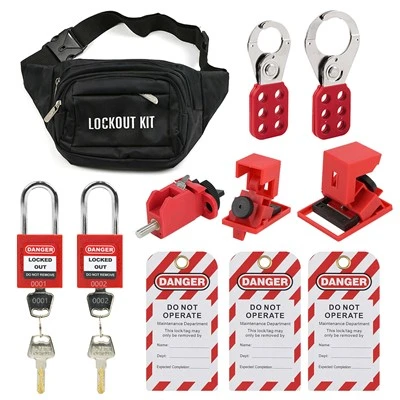
Many procurement teams view lockout kits as nothing more than a set of safety padlocks and locking devices packed into a carry case.
However, from the perspective of actual LOTO users, the role of a lockout kit goes far beyond this.
A well-designed lockout kit should enable authorised personnel to:
1. Quickly identify hazardous energy sources
2. Select the appropriate locking devices without hesitation
3. Efficiently implement energy isolation
4. Maintain personal control over the locking process
5. Support collective locking activities when multiple workers are involved
In other words, a lockout kit is not merely a storage solution, but a ready-to-use energy isolation system for on-site deployment.
The effectiveness of a LOTO programme often depends on whether staff can easily translate written procedures into practical action. When the required equipment is unavailable or difficult to locate, compliance rates tend to fall, regardless of the quality of training.
Common Mistakes in Lockout/Tagout Kit Design
1. Focusing Exclusively on Electrical Hazards
One of the most common mistakes is to configure lockout/tagout kits solely around electrical isolation.
Typical components may include:
Circuit breaker lockout, electrical safety padlocks, warning lockout tags
Whilst these devices are important, many industrial machines involve multiple energy sources, including:
Pneumatic, hydraulic, mechanical energy, gravity hazards, thermal energy, energy storage systems
Technicians may successfully disconnect the electrical supply but overlook residual compressed air or hydraulic pressure within the system.
An effective lockout kit should reflect the actual energy characteristics of the equipment being maintained, rather than focusing solely on electrical hazards.
2. Failure to comply with collective lockout requirements
Maintenance shutdowns typically involve multiple departments and contractors working simultaneously.
Personnel involved may include:
Electricians, mechanics, production technicians, external service providers
In such situations, a single lockout device may not provide adequate control.
Lockout kits designed specifically for team maintenance activities should typically include:
Safety lockout hooks, group lockout boxes, padlocks with multiple keys, and identification tags
If these tools are missing, workers may mistakenly assume that other staff have properly locked out the equipment, leading to uncertainty regarding who is responsible.
Group lockout equipment helps ensure that every worker retains personal control over their own safety.
3. Lockout kits are stored too far from the work area
Another issue frequently identified during facility audits is the inconvenience of accessing equipment.
Some organisations store all lockout equipment centrally in the maintenance office or security department.
Whilst this practice simplifies inventory management, it can create operational obstacles.
When technicians have to traverse the entire facility to retrieve locking devices, they may:
delay implementing locking procedures, use temporary alternatives, or even omit certain isolation steps entirely
Safety professionals are increasingly recognising that accessibility directly impacts compliance.
The easier it is to access the correct locking devices, the more consistently staff will adhere to established procedures.
The Shift Toward Task-Based Lockout Kits
Many manufacturers are moving away from the traditional "one kit fits all" philosophy.
Instead, lockout kits are being designed around specific maintenance tasks and equipment categories.
Electrical Maintenance Kits
Common contents include:
1.Miniature circuit breaker lockouts
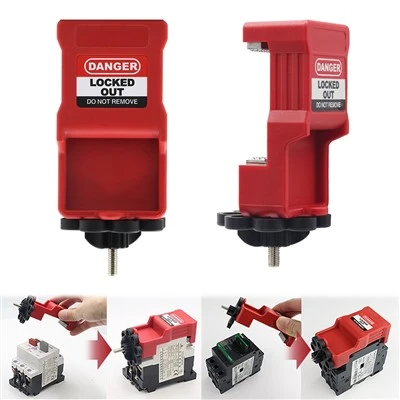
2.Clamp-on breaker lockouts
3.Electrical safety padlocks
4.Lockout warning tags
Mechanical Maintenance Kits
1.Typical components may include:
2.Ball valve lockouts
3.Gate valve lockouts
4.Cable lockout devices
5.Safety lockout hasps
Shutdown and Turnaround Kits
For large maintenance projects, facilities often prepare dedicated kits containing:
1.Group lock boxes
2.Multiple lockout hasps
3.Contractor safety locks
4.Equipment isolation documentation
This approach helps reduce preparation time while ensuring workers have immediate access to the devices required for specific tasks.
An Emerging Performance Metric: Lockout Kit Readiness
Among safety managers, the concept of 'lockout kit readiness' is attracting increasing attention.
The core principle is very simple:
Can authorised staff access all the equipment required to carry out a complete lockout procedure within minutes of starting work?
If the answer is no, the problem may not lie with staff behaviour or the effectiveness of training, but rather indicates that the lockout equipment system itself needs improvement.
Lockout kits should support maintenance staff's workflows, not create additional obstacles.
Facilities that regularly assess kit readiness often identify opportunities to improve compliance and operational efficiency.
Conclusion
The success of a lockout/tagout (LTO) programme does not depend on the number of padlocks stored in a cupboard, but rather on how effectively employees isolate hazardous energy sources in their day-to-day work.
A well-designed lockout kit helps bridge the gap between written safety procedures and actual practice. By focusing on ease of access, equipment-specific requirements and task-based categorisation, organisations can both strengthen compliance and enhance worker protection.
As industrial environments continue to evolve, the most effective lockout kits will be those designed around the practical realities of maintenance work-rather than merely the equipment they contain.
HiLink is Your One-Stop Safety Lockout Tagout Solution Expert!