Introduction
Lockout-Tagout (LOTO) procedures are critical safety protocols used to control hazardous energy sources during the maintenance or servicing of machines and equipment. By securing energy-isolating devices with locks and clearly visible tags, LOTO helps prevent accidental equipment startup-significantly reducing the risk of injury to workers. What began as a targeted safety measure has since developed into a globally recognized standard for workplace safety, guided by rigorous regulatory frameworks. This article explores the development of LOTO practices and highlights the importance of using reliable, high-performance LOTO equipment-both for distributors aiming to provide value-added solutions and for end-users committed to operational safety and compliance.
Evolution of LOTO Standards and Safety Awareness
The development of today's Lockout/Tagout (LOTO) protocols began in the 1970s, a time when industrial safety regulation started to take shape. In the United States, the passage of the Occupational Safety and Health Act in 1970 gave OSHA the authority to establish enforceable workplace safety standards. Following a surge in serious accidents-such as the alarming number of fatalities among automotive workers in the late 1970s-labor groups called for urgent regulatory action. In response, OSHA introduced a draft LOTO regulation in 1980, culminating in the official release of the Control of Hazardous Energy standard (29 CFR 1910.147) in 1989. This rule, influenced by earlier ANSI guidelines, laid out a systematic approach to isolating energy sources and securing them with lockout and tagout devices.
Since then, LOTO protocols have been continuously updated to reflect evolving technologies and industry needs. Globally, other regions followed suit: the European Union's Machinery Directive, for example, mandates energy isolation during maintenance, while ISO 14118 sets international benchmarks for preventing the unintentional energization of machinery. These legal frameworks have significantly elevated awareness of hazardous energy control and established LOTO as a core element of workplace safety culture across manufacturing, utilities, and other industrial environments.
Why Lockout/Tagout Is Critical for Preventing Workplace Accidents
When machinery breaks down, jams, or needs servicing, maintenance work often begins under the assumption that the equipment is no longer dangerous. However, if hazardous energy-whether electrical, hydraulic, mechanical, or pneumatic-is not fully isolated, a sudden reactivation can lead to devastating consequences. The Lockout/Tagout (LOTO) system was designed to eliminate this risk by physically blocking energy flow and clearly warning others not to restore power.
A lockout device, as defined by OSHA, is a secure mechanism (such as a padlock) applied to an energy control point to keep it in a safe, non-operational position. Tagout devices, on the other hand, serve as visible warnings that clearly communicate "do not operate" until authorized removal. When used together, lockout and tagout form a dual-layer safeguard: one mechanical, one communicative.
The role of LOTO in protecting lives cannot be overstated. According to OSHA data, strict adherence to LOTO protocols prevents an estimated 120 deaths and over 50,000 injuries each year in the United States alone. These injuries include electric shock, crushing, severing, burns, and other serious trauma from sudden machine startups or stored energy discharges.
Tragically, non-compliance with energy control procedures continues to cause fatal incidents. One real-world case from 2006 involved a technician fatally injured by a plane engine that started unexpectedly due to skipped lockout steps. In another incident, a 17-year-old suffered the loss of both legs when a baler reactivated during an attempt to clear a jam. Data shows that up to 10% of serious industrial injuries are linked to failure in hazardous energy control.
Studies also indicate that thousands of injuries resulting in lost workdays, along with dozens of fatalities, occur annually in the U.S. due to incomplete or absent LOTO practices. These statistics strongly reinforce a critical truth: proper use of lockout and tagout systems is the most effective way to shield maintenance workers from energy-related dangers and create a safer industrial environment.
Benefits of a Strong Lockout/Tagout (LOTO) Program
Implementing a comprehensive Lockout/Tagout system-one that includes reliable devices, clear procedures, and trained personnel-offers far more than regulatory compliance. It delivers real-world advantages across safety, operations, and organizational culture. Here are the most important reasons to invest in a high-quality LOTO strategy:
1. Protecting Lives and Preventing Injuries
The most critical benefit of any LOTO program is the prevention of serious incidents. When machines are properly locked and tagged before servicing, the risk of unexpected energization is dramatically reduced. Studies show that using LOTO effectively helps avoid over 100 fatalities and tens of thousands of injuries in the U.S. each year. These systems are essential for shielding workers from electrical shocks, mechanical entrapments, and sudden pressure releases.
2. Ensuring Legal and Regulatory Compliance
Government safety bodies-such as OSHA in the United States-require employers to follow strict guidelines for hazardous energy control. Not complying can result in penalties, legal issues, and even operational shutdowns. A fully implemented LOTO system helps meet the mandates of standards like OSHA 29 CFR 1910.147 or international equivalents (e.g. ISO 14118, GB/T 33579). Employers must provide standardized locks (unique, durable, and non-transferable) and tags that cannot be mistaken for other uses. Professionally manufactured LOTO equipment is designed with these legal requirements in mind, simplifying audits and inspections.
3. Minimizing Downtime and Enhancing Operational Efficiency
While lockout procedures may require initial time investment, they lead to smoother maintenance cycles and fewer unexpected halts. Well-documented isolation steps reduce guesswork, prevent errors, and accelerate troubleshooting. As a result, machinery stays operational longer, and workers can restore equipment faster and more safely. Experts agree: consistent LOTO application reduces maintenance delays and enhances overall production reliability.
4. Reinforcing Safety Culture and Employee Confidence
When LOTO systems are actively used on the shop floor, it sends a powerful message: the company values its people's safety. Requiring employees to use lockout padlocks and tags encourages accountability and fosters mutual respect. In such environments, team members are more likely to report hazards, follow procedures carefully, and feel engaged. This kind of proactive safety culture supports higher morale, reduces turnover, and strengthens retention.
5. Reducing Legal Exposure and Operational Costs
A serious accident caused by poor energy control can lead to substantial financial consequences-medical claims, legal action, damaged equipment, or reputational harm. By implementing a strong LOTO framework and using quality-assured products (e.g. color-coded, tamper-proof padlocks, or standardized hasps), companies lower their exposure to risk. Insurance costs and liability risks go down, while operational reliability improves. For distributors and buyers alike, the message is clear: investing in certified LOTO gear today prevents costly incidents tomorrow.
Summary: Safety and Success Go Hand in Hand
From saving lives to boosting efficiency and trust, Lockout/Tagout systems are essential for any industrial environment. A structured approach-with the right tools, training, and oversight-not only aligns with legal obligations but also brings measurable long-term benefits for manufacturers, workers, and LOTO equipment providers.
Where Lockout/Tagout Is Essential: Key Industrial Applications
Lockout/Tagout (LOTO) protocols are indispensable in any work environment where equipment is powered by hazardous energy. Whether it's electrical, mechanical, hydraulic, or chemical energy, the potential for injury is ever-present unless proper isolation procedures are in place. Below are critical industries and settings where LOTO plays a vital role in safeguarding personnel.
Manufacturing Facilities and Production Lines
In industrial factories, maintenance teams regularly service machinery such as stamping presses, robotic arms, CNC machines, and conveyors. To prevent accidental restarts during servicing, centralized LOTO stations are typically installed near work zones. These stations are stocked with an assortment of color-coded padlocks, identification tags, and safety hasps, allowing authorized workers to efficiently apply lockout devices. Organized storage ensures workers can quickly access the right tools and reinforces procedural compliance.
Example: A wall-mounted LOTO station equipped with 30+ locks and tags ensures workers servicing high-speed conveyors can isolate each energy source individually and securely.
Energy, Utility, and Electrical Infrastructure
LOTO is a non-negotiable safety measure in power generation and distribution sectors. From switchgear in substations to transformers, valves, and power lines, workers rely on lockout devices to prevent sudden energization. Electrical isolation remains the most frequently applied category of LOTO usage-accounting for over 30% of industry demand. Whether working on high-voltage circuits or natural gas pipelines, locking out control points is key to avoiding arc flash, electrocution, or explosive discharges.
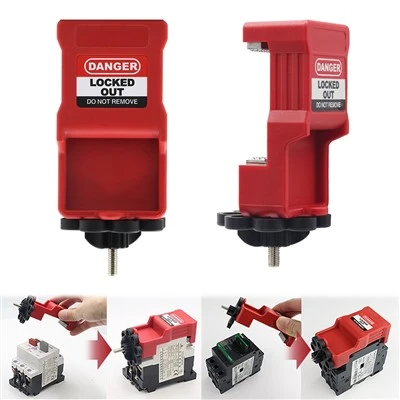
Example: A technician locks out a main electrical breaker panel using a breaker clamp, padlock, and visible warning tag before accessing downstream equipment.
Petrochemical and Oil & Gas Sectors
In refineries, pipelines, and chemical manufacturing plants, hazardous liquids and gases flow under high pressure. LOTO devices-such as valve covers, wheel lockouts, and flange lockouts-are applied to pumps, tanks, and pressurized vessels to prevent unexpected flow or chemical release. Even tasks that appear routine, like replacing a gasket or tightening a flange, may involve latent risks from residual chemical energy if not properly isolated.
Example: Maintenance crews use group lockout boxes to manage access to multiple gas lines, ensuring no valve is reopened until every technician has removed their lock.
Construction, Mining, and Heavy Equipment Operations
Large mobile and stationary machinery-like cranes, hoists, bulldozers, or turbines-must be rendered immobile during servicing. Specialized LOTO equipment such as brake locks, clampouts, and custom lockout arms are used to physically prevent mechanical movement. These setups are often designed to accommodate multiple users, where each worker places their padlock to ensure no reactivation until every person completes their work.
Example: A spillway gate hoist system is locked out using a heavy-duty brake lock secured by multiple technicians. The device ensures the gate cannot be lowered during inspection or repair.
Other Sectors and Non-Traditional Settings
LOTO extends far beyond traditional factories. For example:
Food and beverage plants isolate mixers and packaging machinery.
Hospitals lockout X-ray and MRI machines during servicing.
Transportation networks apply LOTO to subway lines and rail systems.
Defense and aerospace sectors follow strict LOTO procedures for ground-support and assembly equipment.
In many facilities, tool rooms and maintenance departments double as lockout supply hubs. Distributors serving these sectors offer complete kits, portable lock boxes, hasps, cable lockouts, and color-coded padlocks to match the exact requirements of each environment.
Universal Value Across Industries
No matter the industry, the presence of hazardous energy demands reliable control. A well-implemented LOTO program ensures technicians and maintenance personnel are protected during every service task. Distributors and suppliers who provide dependable lockout solutions contribute directly to operational safety, regulatory compliance, and workforce confidence across diverse applications.
Emerging Technologies and the Future of Lockout Tagout (LOTO)
The lockout/tagout (LOTO) field is undergoing significant transformation as new technologies reshape how safety is managed in industrial environments. These innovations aim to improve precision, accountability, and overall efficiency.
Smart Lockout with IoT Integration
Traditional padlocks are being augmented-or even replaced-by intelligent, connected locking mechanisms. These electronic locks can be centrally monitored, giving safety supervisors a real-time view of active lockouts and key ownership. Many modern devices use Internet of Things (IoT) connectivity to deliver live updates and issue automated compliance notifications, greatly minimizing human error. Centralized dashboards ensure that all lockout stages are completed properly, and audit trails are instantly available for inspection.
Digital Compliance and Procedure Management
LOTO compliance is now supported by robust software systems that guide users through workflows digitally. Workers can use mobile apps to scan QR codes at lockout points, follow digital checklists, and document procedures on-site. Cloud-based systems maintain detailed records of equipment isolation processes, enabling quick reporting and streamlined audits. This digital infrastructure simplifies procedure tracking and ensures full regulatory compliance, all while saving administrative time.
Immersive Training Tools and Culture Building
Training is evolving, too. Simulated environments using virtual reality (VR) and 3D modeling allow workers to learn and rehearse LOTO processes safely. These training methods have been shown to improve safety awareness and procedural retention. Suppliers and training providers can now offer full training kits, including digital or VR-based learning modules, which appeal to companies aiming to build a deeply rooted safety culture.
AI and Predictive Safety Technologies
Looking ahead, artificial intelligence and machine learning are beginning to play a role in energy isolation strategies. Some systems are being developed to detect anomalies in machine behavior and trigger pre-emptive lockout actions automatically. In parallel, blockchain technology is being tested to secure LOTO documentation by creating tamper-resistant, timestamped records. These emerging tools reflect a broader trend toward intelligent, autonomous safety systems aligned with Industry 4.0 practices.
Green and Sustainable Lockout Solutions
Environmental responsibility is becoming increasingly relevant in product development. Manufacturers are introducing eco-conscious materials such as recycled plastics for tags, solvent-free inks for labels, and reusable lockout devices. For distributors, emphasizing the sustainability of LOTO products can appeal to clients looking to align their safety programs with broader ESG (Environmental, Social, Governance) goals.
Overall, the LOTO sector is advancing rapidly, moving far beyond paper-based procedures and static devices. Companies that adopt or supply next-generation solutions-like connected padlocks, mobile-enabled protocols, or immersive training-can position themselves as leaders in modern industrial safety. Staying ahead of these trends will be key for distributors aiming to offer cutting-edge, compliant, and efficient safety systems.
Selecting Reliable LOTO Equipment: What Distributors Should Prioritize
For LOTO product distributors and vendors, offering top-tier safety solutions isn't just about sales-it's about aligning with customer needs, regulatory compliance, and long-term performance. Here are some key factors to consider when evaluating or presenting lockout tagout products:
Regulatory Compliance and Product Integrity
All devices, from padlocks to tags, must meet legal and industrial benchmarks. According to OSHA, lockout equipment should be strong, durable, and standardized to prevent unauthorized removal. Products should follow strict requirements in terms of build quality and design-for example, using hardened or coated materials, ensuring visibility with bright tag colors, and avoiding master-key systems. Stocking individually keyed padlocks ensures only the authorized worker can remove the lock, reinforcing safe procedure. Highlight key product features such as UV-resistant tags, heavy-duty hasps, or reinforced cables.
Ready-Made Kits and Centralized Systems
Companies often prefer pre-configured LOTO kits that contain all necessary components. These can include various isolation tools, locks, and pre-labeled tags, designed to cover multiple equipment types. Offering complete lockout stations (portable or wall-mounted) makes it easier for maintenance teams to access tools during urgent tasks. These solutions eliminate downtime caused by missing equipment and simplify inventory control. Present them as "all-in-one safety centers" to appeal to operations teams seeking both convenience and compliance.
Customization and Identification
Top suppliers provide branding and labeling services for lockout equipment. Custom-printed tags with unique IDs or company names help enforce accountability and trace usage. Color-coded locks-sorted by shift, department, or energy source-also make it easier for users to follow internal protocols. For distributors, these personalization options provide a competitive edge and demonstrate attention to detail that safety managers appreciate.
Education and After-Sales Support
Offering high-quality equipment is just part of the equation. Distributors who also provide educational materials-such as training manuals, visual guides, or safety posters-show they're serious about their customers' safety outcomes. Partnering with compliance consultants or LOTO educators to provide resources can boost trust. Use industry data, such as the high number of LOTO-related OSHA violations and penalties, to emphasize why proper training matters as much as product quality.
Durability and Guarantees
In tough industrial environments, LOTO gear must withstand wear and extreme conditions. Make sure to specify durability features such as corrosion resistance, legibility over time, and temperature tolerance. Warranties, certifications, and product lifespan data can give buyers confidence. Emphasize the long-term value: better products mean fewer replacements, less risk, and more credibility for distributors known for offering dependable safety solutions.
By tailoring the message to facility managers, safety supervisors, and maintenance leads-emphasizing how quality lockout products protect workers and operations-distributors can shift the perception of LOTO gear from "compliance cost" to "essential investment."
Final Thoughts
LOTO practices have evolved into a critical component of global workplace safety. As standards grow more sophisticated and awareness increases, so too does the demand for high-performing energy isolation tools. For distributors, this represents a growing opportunity-those who stay current with innovation and safety trends will stand out. For end-users, the choice is clear: using well-engineered LOTO products reduces operational risk, improves compliance, and saves lives. From rugged padlocks to smart digital systems, investing in quality lockout solutions builds a safer, more efficient future.
Note: This article is informed by current OSHA guidelines and recognized industry research focused on lockout/tagout systems and workplace safety best practices.