Make zero accidents a tangible goal, not just an empty slogan.
Every year, people are injured or killed because stored energy is underestimated or equipment is improperly isolated. Lockout/tagout is the most effective measure to prevent such accidents. This article provides you with a practical, professional, and immediately shareable LinkedIn post. It includes operational procedures, checklists, and real-world advice to help you earn your followers' appreciation and safeguard lives.
What is Lockout/Tagout (LOTO)?
Lockout/Tagout (LOTO) is a process for isolating hazardous energy sources-including electrical, mechanical, hydraulic, pneumatic, thermal, chemical, and gravitational energy-to prevent their accidental release during maintenance, inspection, or repair. This system employs physical devices (locks, padlocks, warning tags) and standardized procedures to ensure equipment remains de-energized until work is completed and authorized personnel permit its restart.
LOTO constitutes a systematic management approach-not merely attaching locks to equipment. It integrates planning, installation, training, verification, and supervision.
Why Lockout/Tagout (LOTO) Matters (One-Sentence Summary)
Because preventing uncontrolled energy release avoids serious injury, fatal accidents, equipment downtime, legal risks, and reputational damage-it's the right thing to do, both ethically and commercially.
Core Principles (Must Be Remembered)
1. Identify all energy sources-primary and secondary. Omitting any makes the lockout procedure incomplete.
2. Isolate energy sources-close valves, disconnect circuit breakers, drain lines, prevent motion, etc.
3. Install safety locks-only authorized personnel hold keys.
4. Hang clear tags-include name, date/time, reason, and contact information.
5. Verify zero energy status-attempt to operate controls; measure voltage or pressure if necessary.
6. Control stored energy-release, block, restrain, or secure springs, pressure vessels, capacitors.
7. Communicate and coordinate-ensure all potentially affected personnel are aware of status.
8. Only authorized personnel may remove devices-bypassing procedures or delegating tasks is strictly prohibited.
Step-by-Step Lockout/Tagout Procedure (Detailed Version)
This is a reliable operational process that can be adopted directly or adapted to your organization's standard operating procedures.
1. Preparatory Work
Identify equipment and all energy sources. Consult manufacturer manuals and schematic diagrams.
Notify affected personnel and supervisors of the shutdown plan.
2. Shutdown Procedure
Place equipment into a safe shutdown state following standard procedures.
3. Isolation Measures
Physically isolate energy sources: Open circuit breakers, close valves, disconnect circuits, and install isolation plates where necessary.
4. Lockout and Tagout
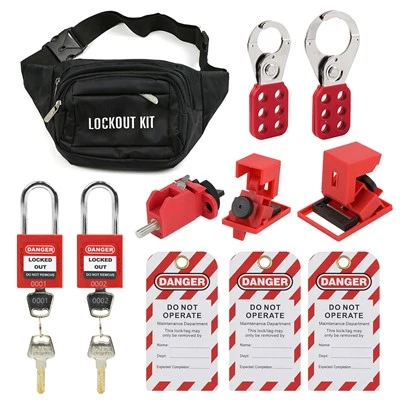
Install designated padlocks at isolation points. Tags must include: Name, Department, Date/Time, Reason for Lockout, Contact Number.
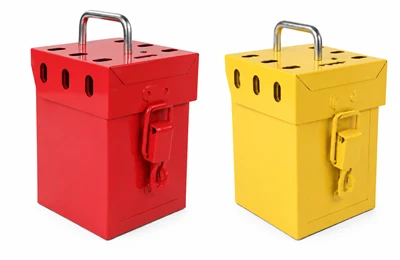
If multiple technicians are involved, each must use an independent padlock. Use a collective lockout box or multi-padlock hook device when necessary.
5. Release Stored Energy
Relieve pressure, discharge capacitors, secure moving parts, and anchor suspended loads.
6. Verify Isolation Status
Attempt to operate the start control device and measure energy (voltage tester, pressure gauge) to confirm zero energy.
Visually confirm the equipment cannot move and energy is disconnected.
7. Perform Work
Conduct maintenance or repair work.
8. Prepare to Re-energize
Inspect tools and ensure protective devices are reinstalled.
Clear personnel from the work area and confirm with affected employees.
9. Release Locks and Restore Energy
Only the person who applied the lock may release it. Follow established group lockout procedures for collective lockouts.
Remove locks/tags, restore energy, and monitor equipment startup.
10. Document and Archive
Record the lockout event: person responsible, time, operation performed, issues encountered, and lessons learned.
Responsibility Assignment: Roles and Responsibilities
Lockout/Tagout (LOTO) Personnel: Trained and authorized to execute lockout procedures and install/remove lockout devices.
Affected Personnel: Working on or near equipment must be notified and maintain a safe distance while lockout devices are in effect.
LOTO Coordinator/Supervisor: Ensures procedures are documented, personnel are trained, and audits are conducted.
Management: Provides resources, equipment, training support, audit mechanisms, and enforcement assurance.
Training Must Emphasize Practical Application: On-site equipment demonstrations, hands-on detector exercises, group lockout drills, and documented competency assessments.
Equipment and Best Practices
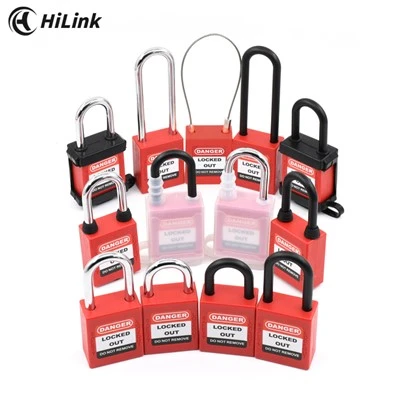
Use sturdy, non-duplicable padlocks and label them with personnel names.
Employ weatherproof, oil-resistant, and abrasion-resistant tags. Tags serve solely as warning indicators and do not replace locks.
Install a power disconnect station near the work area, equipped with universal tools, lockout devices, tags, and spare padlocks.
For complex systems, implement color-coded identification for energy types (electrical, hydraulic, pneumatic) and systematically enforce isolation procedures.
Collective Lockout and Shift Change Procedures
When working in teams, use a multi-lock padlock or lockout box, with each member applying an independent lock.
During shift changes, outgoing personnel may only remove locks after completing the handover and informing the authorized incoming personnel; a formal handover checklist must be used.
If the authorized personnel leaves without removing the locks, removal is permitted only after following the written verification and management approval process.
Common Errors and Solutions
Error: Not identifying all energy sources. Solution: Require listing all energy sources through formal procedures and obtaining signed confirmation.
Error: Label without lockout device. Solution: Mandate use of lockout devices; labeling alone is insufficient for safety.
Error: Inadequate verification measures. Solution: Standardize verification methods (e.g., specific gauge checks or pressure readings) and document verification procedures.
Error: Poor contractor coordination. Solution: Require contractors to submit LOTO plans and implement single-point coordination through on-site LOTO coordinators.
Audits, Key Performance Indicators, and Continuous Improvement
Conduct lockout/tagout (LOTO) audits regularly (monthly in high-risk areas, quarterly in other areas).
Key Metrics: Number of LOTO procedures performed, near-miss reports related to energy controls, audit non-conformities, and timeliness of corrective action completion.
Following any incident, conduct root cause analysis focusing on process failures (not limited to operator errors).
HiLink is your one stop safety lockout tagout solution expert!