A customer wants to lock out their machines. The request comes in as "LOTO kit", and it doesn't say where the equipment sits, how many people work on it, or who checks that the locks came back off at the end of the shift.
We get this a lot, and it's rarely the buyer's fault. Kits and stations sit next to each other in every catalog, they hold many of the same parts, and the station is usually the bigger line item. So it reads like the upgraded version of a kit. It isn't. One is a bag you carry to the work. The other is a fixture that belongs to a machine. Get that backwards and the hardware ends up in a cupboard with the tags still folded in their packaging.
Here's how we work through it when a distributor sends us a configuration request.
First, what each one actually is
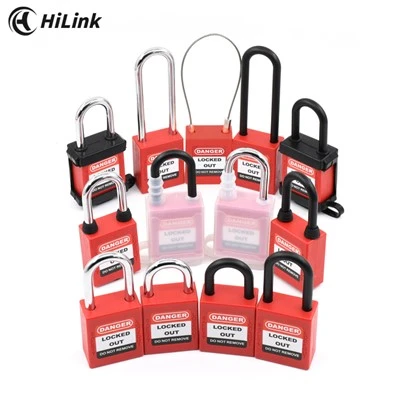
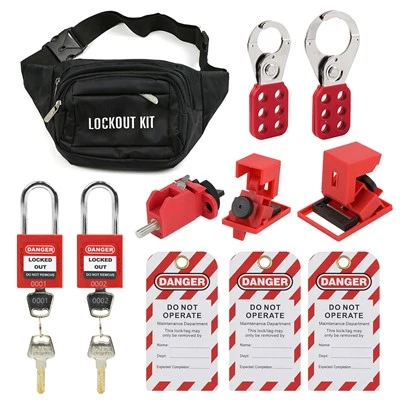
A LOTO kit is a portable set. Padlocks, hasps, tags, tag ties, and the device types a technician meets most often, packed into a bag or a case that travels with the person. It lives in a van, a tool cart, or a maintenance bag. Nothing gets installed. You open it, you take what the job needs, you close it and carry it to the next job.
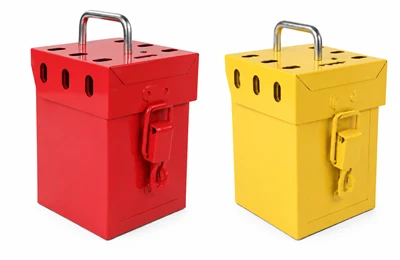
A lockout station is furniture. A board or a cabinet fixed to a wall near the equipment it protects. It holds the same kinds of devices, plus a supply of tags, plus, on the bigger ones, a lock box for group work and a place to hang keys or record who has locked what. It stays put. That's the whole point of it.
Same components inside. Completely different behavior once they're in a plant.
One detail that matters more than buyers expect is the case. A soft bag survives a van. A hard case survives being thrown in a truck bed every morning. The same device set in the wrong bag gets replaced inside a year, and the customer blames the locks.
The real difference is accountability, not price
People compare these two on piece count and price, which is the least useful comparison you can make. The better question is: who is responsible for the lock, and how does anyone else know it's there?
A kit gives you personal accountability. The technician owns the set. If a padlock is missing, one person notices, because it's their bag and they need it in ten minutes. Kits stay complete for that reason. They also stay invisible. A supervisor walking past a machine has no idea whether the right locks are on it.
A station gives you shared visibility. The devices have a home, the empty hook tells you something is out in the field, the tag rack tells you whether the supply is being used or hoarded. When an auditor or a visiting contractor walks through, the station is the evidence that the program exists. What a station can't do is follow a technician to the pump house at the far end of the site.
That trade-off, portable versus visible, is the whole decision. Everything else is detail.
| LOTO kit | Lockout station | |
|---|---|---|
| Where it lives | With the person | At the equipment |
| Installed | No | Yes, on a wall |
| Best for | Mobile work, contractors, remote points | Fixed equipment, shared by crews |
| Group lockout | Only with extra hasps and locks | Built for it, with a lock box |
| Who sees it | The person carrying it | Anyone walking past |
| Failure mode | Walks away and never gets replenished | Becomes decoration nobody audits |
When a kit is the right answer
A kit wins when the work moves. One or two technicians covering a line, a contractor arriving on site with no fixed lockout point, rooftop units, wellheads, conveyors at the back of a warehouse, a service truck that visits five customers a day. In all of those, a wall station is useless, because there's no wall that matters.
It also wins when a customer is starting a program and doesn't want to commit to drilling holes in a plant yet. A kit is a low-risk first purchase. It lets them run one job properly, see what devices they actually reach for, and then buy the station with a device mix based on real use instead of a catalog guess. We'd rather see that than sell someone a full board they configure wrong.
One more case worth mentioning, because distributors miss it: small sites. A workshop with four employees and one machine doesn't need a station. It needs one kit that stays complete and a written procedure saying who uses it.
When a station is the right answer
A station wins when the equipment stays put and more than one person touches it. Multi-shift maintenance is the classic case. Shift A locks out a press, shift B arrives, and there needs to be an obvious place where the locks, tags and keys belong, plus a record of what's currently isolated.
Group lockout pushes it further. When three or four people work on the same machine, each one needs their own lock on the isolation point, which means a hasp that takes multiple locks, and usually a lock box where each worker puts their key. All that hardware is station-side. You can carry a hasp in a kit, but you can't run a proper group procedure out of a bag.
There's also the audit angle. OSHA's lockout/tagout standard asks for a periodic inspection of the energy control procedures at least annually, and in practice that inspection is easier to defend when devices have a fixed home and tags are stocked in one place. A plant that can't find its tags on inspection day has a problem that has nothing to do with the hardware quality.
The case where they need both
Most plants end up here, and it's not a compromise. Station at the machine center where the fixed equipment is, kits for the people who travel to the rest of the site. The station carries the shared devices, the lock box, and the tag supply. The kit carries a personal lock, a hasp, and whatever that technician needs for the points they reach most.
The part that takes a minute to get right is the duplication. Some devices should exist in both places, padlocks and hasps mainly, because two people working in different areas can't share one bag. Others should live only on the station, breaker lockouts for the fixed panels, valve lockouts for the process line, because carrying a second set just means a second set to lose. When we split an order like this, we usually start from the devices that are tied to a specific machine and leave everything generic, the locks and tags and hasps, free to travel.
Distributors who sell only one of the two lose the follow-on order, usually within a year. The customer buys the station, then buys kits from whoever answers the phone first. Or buys kitting first, then a station from a competitor when a group job comes up. It's the same account either way.
Three questions that settle it on a call
You don't need a site survey to get to a first answer. Ask these three and the shape of the order is usually obvious.
How many people lock out the same equipment at the same time? One person, one lock, a kit is enough. More than one, you need hasps and probably a lock box, and that means a station.
Does the equipment stay in one place? If the answer is mostly yes, a station is doing the work. If the technician drives between buildings, the kit is.
Who checks that the devices came back? If there's a named person or a shift handover, a station fits that habit. If nobody checks and nobody will, start with a kit, because an unmanaged station rots faster than an unmanaged bag.
When the answers disagree, go station first and add kits as the second order. The station is the anchor: it defines where the program lives, and the kits follow the people out from there.
Where buyers get this wrong
The most common mistake is buying a kit per technician in a plant that really needs a station. Devices walk, tags don't get replaced, and within a year the program exists only on paper. It looks cheaper on the purchase order and costs more over three years.
The second is buying a station for a three-person crew with equipment spread over half a kilometer. People won't walk back for a padlock. They'll use a tag and hope.
Third: treating the kit as a starter that never gets upgraded. A kit is not a stepping stone you leave behind. It's the right tool for mobile work forever.
Fourth: forgetting consumables. Tags and ties run out. A station with an empty tag rack is worse than no station, because it looks like compliance while the actual job goes unprotected.
And the one that costs the most: buying on piece count. A large kit with the wrong device mix is a worse purchase than a smaller one that matches the isolation points on the floor. We've seen kits with six valve lockouts for a plant that has no valves and no breaker lockouts for a plant full of them. Piece count is a marketing number. The isolation point list is the real spec.
What we ask before we quote a configuration
Four things, and none of them are about price.
The isolation points, with photos if the customer can manage it. Breakers, disconnect switches, valves, plugs, whatever they actually have. Photos settle more arguments than descriptions do.
How many people work on one job at the same time. This decides whether the answer includes hasps and a lock box.
Whether contractors come on site. Contractors change the design, because they bring their own locks and need somewhere to hang them.
Where the station would hang. Indoor wall, washdown area, outdoor pole. A station built for a clean electrical room and one built for a wet food plant are different builds, even when the device list looks identical.
Get those four right and the configuration is straightforward. Get them wrong and you're shipping a board that gets rehung three times.
If the customer can't send photos, a machine list works too. Nameplate data, the panel schedule, even a phone call walking down the line with the maintenance lead is usually enough to get the device types right, and it's faster than waiting three weeks for a drawing that never arrives. What we can't work from is a piece count alone, because that tells us nothing about what the customer is actually isolating.
A note for distributors on stocking both
Kits turn over. They're easy to stock, easy to ship, and they solve a problem the customer can feel immediately, so they're a reasonable thing to keep depth on.
Stations are project items. They get configured per site, so stocking a wide range of them ties up money for months. What's worth keeping is one demo board you can put in front of a customer, plus a supplier who can turn a configuration around without a six-week wait and can supply replacement devices one at a time. A station that can't be replenished item by item becomes a station that gets replaced entirely, and that's a lost account, not a lost order.
If a customer asks "kit or station", the honest answer is usually "both, in this order". Selling them the sequence is more useful than selling them the bigger box.
There's a second reason to keep a demo board, and it isn't the sale. It's the conversation. A customer who can pull a hasp off the wall, feel the weight of a padlock and see how a tag hangs will tell you what's wrong with their current setup in about four minutes. You don't get that from a catalog page, and you certainly don't get it from a price list.
Questions we get asked about this
Can a kit handle group lockout? Only if you add hasps and enough locks for everyone on the job. It works for two people. Past that, a lock box on a station is cleaner, and safer, because each worker keeps their own key.
Does OSHA require a lockout station? No. The standard requires a program, written procedures for the equipment covered, training, and a periodic inspection. Which hardware you use to satisfy that is a design choice, not a compliance checkbox. Anyone telling you a station is mandatory is selling a station.
Can a customer start with a kit and move to a station later? Yes, and the devices carry over. That's the argument for buying decent padlocks and hasps first: they'll still be in service when the station goes up.
What about tags? Treat them as consumables. Whatever the customer buys, someone needs to own reordering, or the program quietly stops.