A lockout kit rarely fails on the job. It fails in the two hundred or so days a year it spends riding around in the back of a truck.
That's the part nobody puts on a spec sheet. Buyers compare a portable lockout tagout kit by counting pieces - four locks, three hasps, thirty tags - and the count tells you almost nothing about what the kit will look like six months in. The parts that quit first are the cheap ones: the bag, the tag, the hasp spring, the velcro that stopped sticking after the second rainy week.
If you sell these kits to contractors, that difference lands on your counter as a return. So here's what actually goes wrong, and where the money should go instead.
Four things that kill a kit before anyone notices
Heat. A closed cab or van box in summer sits well past 50°C for hours. Hook-and-loop tape softens and stops grabbing. Thin polypropylene cases go soft and take a set, so the lid never closes flush again.
Water. Not the downpour - the slow kind. A wet kit goes back in the truck wet, and the moisture sits in the fabric for days. Steel starts at the plating seams, not on the flat face.
Grit. Grinding dust and concrete fines work into every gap. They chew stitching, jam zippers, and pack into the hasp slot so the shackle doesn't drop through cleanly.
Other people's hands. A crew of six sharing one contractor lockout kit is the real test. Locks migrate between jobs, tags get written on and reused, and nobody puts anything back in the right pocket.
The bag dies first - and it's the cheapest thing to fix
Open a failed kit and the hardware usually still works. The bag is what's gone. Zipper split, seam pulled out at the corner, lining torn where the hasps rub.
We build these kits ourselves, and the argument with fabric suppliers is always the same three points:
Fabric weight. 600D polyester with a PVC backing holds up where 420D starts pilling. This is the single biggest cost lever, and the easiest one to quietly downgrade.
Stitch density at the stress points. Bar-tacked corners and double-stitched handles cost a few cents. Single-row stitching at the handle is where bags tear, every time.
Closure type. Velcro is fast and it fills with grit. Coil zippers last longer in dust but corrode if the pull is cheap. A flap over the zipper buys you a couple of years of grit protection for almost nothing.
Internal dividers matter too, but not for the reason people think. They aren't about neatness - they stop the steel hasps from grinding against the lock bodies for eight hours a day. The lockout kit bags and stations we make are built around that, not around how they photograph.
Tags fade long before they tear
Lockout tags get judged on the wrong thing. Buyers squeeze the material. The failure that matters is legibility.
Paper-based tags with a thin film go first. UV does the work, then oil and solvent finish it. Six months on a machine and the "Do Not Operate" is a grey smear - which is worse than no tag, because now the tag is a false record.
What to look for in a lockout tag:
A PET or vinyl substrate rather than paper core
Print that sits under the laminate, not on top of it
A reinforced eyelet - the grommet tears out of cheap tags before the print fails
A matte writing patch that takes a marker and doesn't smudge
If a customer is tagging outdoor equipment or anything near hydraulics, that last point matters more than the price difference. Ask what they write with. Sharpie on gloss film is a five-minute tag.
Locks and hasps: where the spec sheet lies
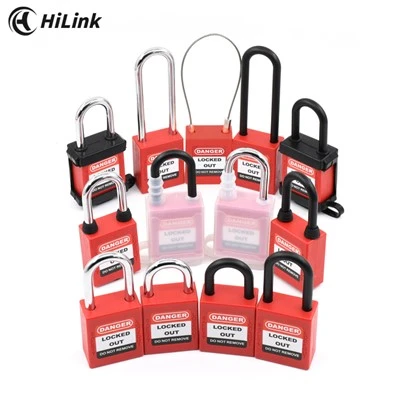
Most portable LOTO kits ship with nylon-body safety padlocks. That's the right call for electrical work - non-conductive, lighter, and the body doesn't scratch panels. Steel is better where the lock gets abused: outdoor valves, construction sites, anything that lives in a gang box.
Shackle diameter is the spec people skip. A 6mm shackle in an 8mm hasp hole rocks. It rocks all day, every day, and it wears the hole oval. Once the hole is oval, the hasp doesn't sit flat and the whole lockout gets sloppy. Match the two, and write the number on the quote.
Keyed alike or keyed different is the question contractors ask most. Keyed alike is convenient - one key per man, no fumbling. Keyed different is what you want when the kit travels between sites and you don't want yesterday's crew opening today's lock. For most service contractors, the practical answer is keyed alike within a crew, keyed different across kits, plus a master chart someone actually keeps.
Group lockout changes the hasp, not the lock. If more than one person works on the same isolation point, you need a hasp with enough holes for everyone plus a lock box for the keys - OSHA 1910.147(f)(3) expects each authorized employee to hang their own lock. A six-hole hasp is the practical minimum for a small crew. Sell the box with it, or the hasp just becomes a decoration.
What should be in a contractor lockout tagout kit
There's no universal list, but trade decides most of it:
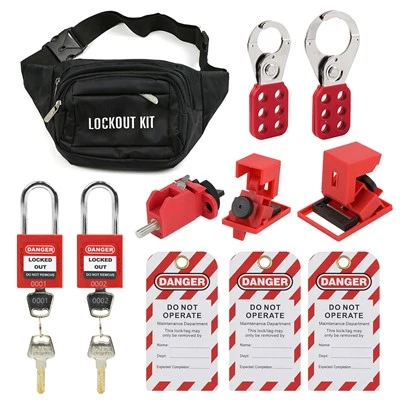
Electricians - breaker lockouts for the panel types they actually meet (MCB, molded case, plug-on), a plug lockout or two, cable lockout, padlocks, tags, and a multi-hole hasp. Get the breaker lockout that fits the common panel in their area - this is the piece that gets phoned in from site.
Mechanical and HVAC - valve lockouts in the sizes on site (gate, ball, butterfly), cable lockout for odd handles, padlocks, tags, hasps. Valve size coverage beats valve count.
Multi-trade service - a bit of everything, and this is where kits get bloated. A 47-piece kit sounds impressive and half of it never leaves the bag. Better to sell a lean base kit plus a top-up pouch for the trade they meet most. That's the thinking behind the HLM25 compact kit and the HLM26 personal kit - small enough that someone actually carries them.
A portable LOTO kit should also carry a contents card and a spare tag or two. Small cost, and it's the difference between a kit that gets restocked and one that quietly goes out of service.
Kit or station - sell the right one
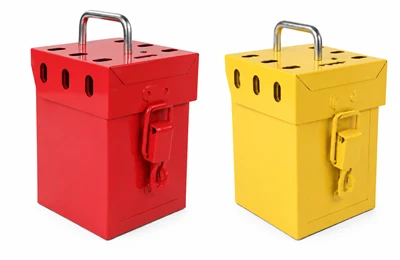
A lockout station lives on a wall in a plant. A portable kit rides with the truck. Distributors lose sales by treating them as competitors.
Contractors buy kits. Facilities buy stations. If a contractor customer keeps asking for a station, they're probably doing repeat work at one site - that's a station sale plus a kit sale, not one or the other.
Three checks before you quote
Thirty seconds at goods-in catches most of what comes back later:
Zipper pull. Flex it. If the pull bends by hand, it will snap in a cold truck.
Tag corner. Bend the laminate at the corner. If it delaminates, the print goes with it.
Case rib. Press the hinge line on the case. No rib, no rigidity, and the lid warps in heat.
None of these need a lab. They just need someone to look before the pallet goes on the shelf.
If you're putting a portable kit range together and want to compare constructions side by side, our lockout kit range is a fair place to start, and you can send us the spec you're being quoted against. We'll tell you which parts we'd not cut.
FAQ
What should be in a portable lockout tagout kit for contractors? At minimum: padlocks matched to the crew size, a multi-hole lockout hasp, lockout tags with a writing surface, and the device that fits their most common isolation point - breaker lockouts for electricians, valve lockouts for mechanical trades. Skip the 47-piece kits; half the contents never leave the bag.
How long do lockout tags last outdoors? It depends on substrate and print, not thickness. Paper-core tags with surface print can lose legibility in a season of sun and oil. PET or vinyl tags with print under the laminate hold up far longer, especially with a reinforced eyelet.
Should contractor kits be keyed alike or keyed different? Keyed alike within a crew for speed, keyed different across kits so one crew can't open another's lock. Keep a master key chart, or the system collapses the first time a key is lost.
Is a portable kit enough, or does the customer need a lockout station? A kit covers mobile work; a station covers a fixed plant. Contractors doing repeat work at one site usually need both - the kit for the truck, the station on the wall.