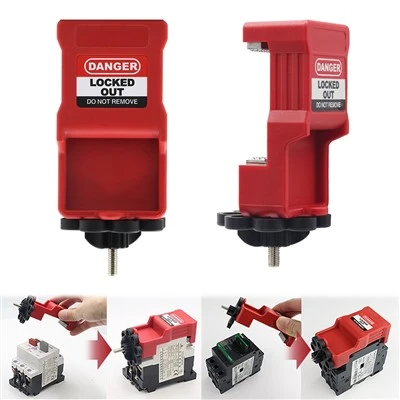
Whether storing legally owned civilian firearms in the home or temporarily managing specialized equipment, a single storage cabinet is far from sufficient to provide comprehensive protection. Traditional lockdown mechanisms provide limited one-dimensional security and are difficult to completely reduce risk. In contrast, cable padlocks --a mainstream compound safety accessory --utilize scientific structural principles and a two-layer protection mechanism as important tools to eliminate firearm safety. A thorough understanding of its protection principles will enable users to ensure proper operation and safety, thus preventing firearms-related accidents at the source.
To understand the protective value of cable padlocks, the main safety risks associated with gun storage must first be identified. Risks in daily use and storage generally fall into two categories: firearms losses due to external theft or unauthorized movement, and accidental discharges due to unauthorized person handling or misuse. Traditional trigger locks and barrel locks secure only one component; they leave huge security gaps that can easily be bypassed and fail to meet both the need to prevent theft and misuse. Unlike traditional rigid locks, cable padlocks employ a dual principle-a combination of flexible binding and mechanical locking-to specifically address various security vulnerabilities and provide comprehensive protection.
The core protection mechanism of cable padlock relies on the combination of high strength flexible steel cable and precision lock body to achieve physical sealing and tamper resistance. The cable is constructed of multi-layer braided steel wire and has exceptional tensile, shearing and impact resistance. It is far stiffer than standard lock cables, insulating them from manual tools and simple cutting equipment, physically eliminating the possibility of forced disassembly or disassembly. With high accuracy and anti-lock core, it effectively resists tampering techniques and attempts to force entry. Its superior lock stability creates a solid first line of defense for firearm storage.
Unlike the single-layer security logic of conventional locks, cable padlocks utilize a dual protection principle that combines "binding/anchoring" and "functional locks," which is a key reason why cable padlocks offer far more protection than traditional locking devices. On one hand, flexible steel cables can be wrapped around key structural points of the gun and secured to a stable anchor,such as a cabinet, mounting bracket or wall, to hold the weapon in place. Even when storage units are destroyed, firearms cannot be moved or removed, effectively eliminating the risk of theft or unauthorized transfers and addressing vulnerability issues associated with traditional storage methods.
Cable padlocks, on the other hand, can precisely shut down the core workings of a gun. By strategically wrapping the cable around key areas --such as receivers, triggers and movements --it directly limits the ability of bullets to be loaded, pulled and recycled. Even if a child or unauthorized person accidentally uses a weapon, they cannot fire it, eliminating the high risk of accidental launch or misuse. This functional locking mechanism prevents accidents from occurring at the source and acts as the primary line of defense.
Compared with traditional firearm locks, cable padlocks have higher versatility and stability. Stiff dedicated locks tend to be model-specific, with limited locking points, creating potential security gaps and potentially wearing down gun components over time. By contrast, cable padlocks are flexible enough to accommodate a wide range of guns-including pistols, rifles and shotguns-allowing for wrapping method and location of locks to be adapted to specific weapon configurations and storage environments. In addition, the protective outer coating of the cable is soft and durable; it prevents scratches on the firearm's finish and metal parts, ensures that the equipment remains in pristine condition and provides security.
In practical security management, cable padlocks are fully compliant with gun safety protocols and can be paired with a safe or storage boxes to create a two-layer protection system. Storage units provide basic containment and isolation, while cable padlocks ensure physical locking and theft-resistant anchoring; this layered approach mitigates multiple levels of risk and significantly enhances security and regulatory compliance in firearm storage. Whether it's long-term storage at home, temporary outdoor stowage or equipment control at training facilities, it's effective against theft, misuse and accidental discharges. In summary, the core protective logic of gun cable lock relies on a multi-faceted approach --combining physical tamper resistance, secure anchoring and functional locking --to eliminate safety risks in all aspects of equipment, operation and storage. Because of its scientifically sound protection mechanism, wide compatibility and reliable performance, it becomes an indispensable component of gun safety management, providing a solid guarantee for the regulation, safe storage and use of firearms.
 English
- English
- Français
- Deutsch
- 日本語
- Italiano
- Español
- Português
- русский
- Melayu
- Türkçe
- Eesti
- বাংলা
- România limbi
- O'zbek
- Malti
- فارسی
- українська
- dansk
- Svenska
- Indonesia
- Srbija jezik (latinica)
- اردو
- suomi
- Norsk
- Bai Miaowen
- slovenčina
- Nederlands
- íslenska
- bosanski
- Cymraeg
- Latviešu
- Polski
- Gaeilgenah Éireann
- Lietuvių
- Ελληνικά
- slovenščina
- عربي
- ไทย
- 한국어
- Kreyòl Ayisyen
- hrvatski
- हिंदी
- magyar
- Čeština
- Català
- עברית
- Việt Nam
- Български