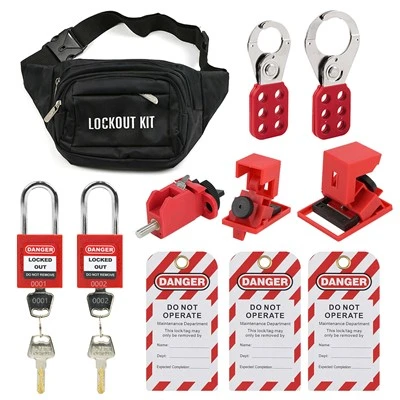
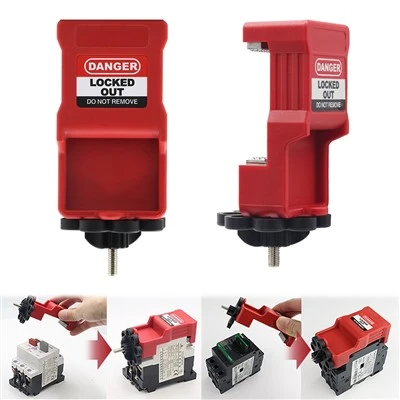
In many industrial and commercial scenarios, lockout and tagout, as an important safety measure and management means, has a unique and exquisite design concept.
One of the core design concepts of lockout and tagout is to ensure the absolute safety of equipment or areas. In many industrial operations, such as repair, maintenance or equipment commissioning, specific equipment needs to be isolated and locked to prevent accidental startup or misoperation from causing harm to personnel. By designing a reasonable locking device and tagout logo, other staff can be clearly told that the equipment is in an inoperable state, thereby avoiding potential safety risks. For example, using locks with specific shapes and colors, combined with eye-catching warning signs, allows staff to identify the safety status of the equipment at first glance.
At the same time, the design concept of lockout and tagout also focuses on the convenience and efficiency of operation. In actual work, staff need to frequently lock and unlock equipment, so the design should simplify the operation process as much as possible to reduce unnecessary time and energy consumption. For example, using a lock structure that is easy to operate and install, as well as clear tagout instructions, enables staff to complete the lockout and tagout work quickly and accurately.
In addition, the design of lockout and tagout also needs to take into account versatility and compatibility. In different working environments and equipment types, the lockout tagout system should be able to adapt to various needs and have high versatility and compatibility. This can avoid the need to use different lockout tagout methods for different equipment and different working scenarios, and improve overall work efficiency and safety.
In short, the design concept of lockout tagout revolves around key factors such as safety, convenience, and versatility, aiming to provide reliable safety management and efficient operation guarantees for various industries.