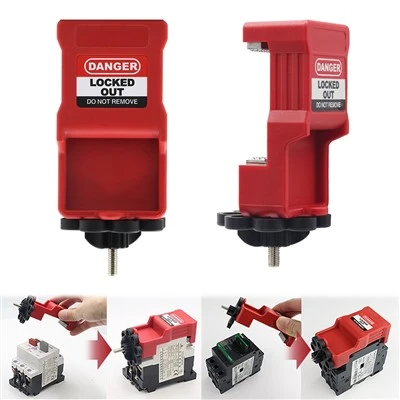
Safety lockout / tagout (LOTO) refers to a structured and standardized operation procedure, aiming to isolate and control dangerous energy sources during machine maintenance or servicing activities. The purpose is to prevent serious or fatal injuries caused by accidental machine startup. Common dangerous energies include electrical energy, mechanical energy, hydraulic energy, pneumatic energy, thermal energy, chemical energy, and energy sources such as springs or pressure that are stored. If these energies were accidentally released, it could lead to serious accidents or injuries, causing unnecessary losses.
In order to minimize such risks as much as possible, many regions around the world have formulated relevant safety regulations, requiring the implementation of a formal "lockout/lock-in" (LOTO) operation procedure. The regulations mandate the use of specialized safety equipment, such as safety lock latches, lock tags, and locking devices, along with written operating procedures to ensure complete energy isolation before the work begins. By fastening the locking electrical switches, valves, or other control points, it is ensured that these switches or valves will not be accidentally opened during the maintenance work.
For example, in the United States, the standards issued by the Occupational Safety and Health Administration (OSHA) 29 CFR 1910.147 require employers to provide comprehensive training to all relevant employees on the operation of locking equipment and locking devices, and strictly adhere to the rule of "one person one lock, one key for each person".
Globally, the LOTO operation procedures are regarded as an important part of workplace safety, helping to avoid the impacts and hazards caused by various accidents.
Standardized shutdown/lockout/tagout operation procedures
A comprehensive shutdown/lockout/tagout (LOTO) procedure requires the use of precise and orderly methods to completely eliminate all dangerous energy sources before any maintenance activities commence. The following are several necessary stages in ensuring a safe and disconnected working environment:
1. Notification and Planning:
Begin by informing all personnel who may be impacted that maintenance or servicing will take place. The authorized individual must then identify all energy inputs-such as electrical, pneumatic, hydraulic, or thermal-and evaluate the associated hazards. A clear plan should be developed for how each source will be isolated and controlled.
2. Equipment Shutdown:
Deactivate the equipment using its standard operating shutdown procedure. This might include pressing stop buttons, flipping switches, or shutting valves. All controls should be returned to the "off" or safe positions.
3. Energy Isolation:
Physically disconnect the equipment from each energy source by opening breakers, shutting off valves, unplugging power cords, or removing fuses. Every point of hazardous energy must be fully isolated to prevent unexpected startup.
4. Release remaining energy:
Release any remaining or stored energy that may pose a danger. This includes the pressure energy in pneumatic or hydraulic systems, as well as the electrical components of devices such as capacitors, fixed or moving parts at heights, and the release of any blocked gas or steam energy.
5. Application of the lockout device:
Locking devices should be installed at all isolation points. Each staff member involved in the work should place a lock with a unique key by themselves to ensure safe and effective control and management. In team-based scenarios, devices like group lock boxes or hasps should be used to accommodate multiple locks. All lockout equipment must be sturdy, easily recognizable, and secured so only the person who applied the lock can remove it.
6. Tag Attachment:
Alongside locks, warning tags must be attached to each point of isolation. These tags should clearly display who applied the lock, when it was applied, and the reason for the lockout. They serve as a strong visual deterrent and a safety communication tool.
7. Verification of equipment isolation:
Before any maintenance work begins, the authorized personnel must confirm that all equipment has been completely powered off. This usually requires attempting to start the equipment through the control interface or switch. If there is no response, it indicates that the equipment has been effectively powered off, and then the maintenance work can be carried out safely and normally.
8. Start the maintenance work:
After all the safety locks and labels have been correctly installed, and the energy isolation work has been confirmed to be error-free, the safety maintenance work of the equipment can be carried out. During this period, unauthorized and unqualified personnel are not allowed to touch any machinery and equipment.
9. System Re-Energization:
Once maintenance is completed, the work area should be inspected to ensure all tools have been removed and no personnel are in danger. Each worker removes their own lock and tag. After all devices are cleared, energy sources can be carefully reconnected and the system restarted. The affected employees should then be informed that normal operations have resumed.
By strictly following these safety procedures, each group and even each staff member can ensure that they are working in accordance with safety standards, thereby reducing the risk of injury caused by accidental release of energy sources during machine maintenance and repair operations.
Global Lockout/Tagout (LOTO) Regulations:
The lockout/tagout measures have received support and promotion from a series of internationally recognized safety regulations. These regulations were issued to control hazardous energy and prevent accidents in the workplace. The following lists the relevant safety standards in major regions around the world:
United States – OSHA 29 CFR 1910.147
In the U.S., the Occupational Safety and Health Administration (OSHA) enforces the "Control of Hazardous Energy" regulation, widely known as the LOTO standard. This rule mandates that employers develop and apply a written energy control program, which includes step-by-step procedures for isolating energy sources and preventing accidental machine startup during servicing. It requires that each type of hazardous energy-electrical, mechanical, hydraulic, pneumatic, or others-be clearly identified and controlled. Furthermore, it obliges organizations to
provide formal training for both authorized workers and those affected by the procedures, along with regular audits to ensure compliance.
European Union – Directive 2009/104/EC & EN ISO 14118
The European Union requires that all work equipment be capable of being disconnected from every form of energy in a clearly visible and reliable way. Under Directive 2009/104/EC, which supersedes Directive 89/655/EEC, employers must ensure that machinery is maintained and used safely. Furthermore, ISO 14118:2017 (which is recognized as EN ISO 14118 within the European Union) particularly emphasizes the use of design and procedural safeguards to prevent machines from operating accidentally. These comprehensive regulations highlight the importance of engineering controls and operational procedures in ensuring the safety of workers.
Canada – CSA Z460-20
Canada's national standard for energy isolation, CSA Z460-20, lays out comprehensive requirements for controlling dangerous energy during maintenance or repair tasks. The standard highlights lockout as the most effective method to eliminate energy hazards. It instructs organizations to implement a formal control plan incorporating lockout/tagout devices, clear procedures, and hazard assessments. Updates in the 2020 edition expand on risk-based decision-making and provide guidance for complex or non-traditional energy control situations.
International standards - ISO 45001 and ISO 14118
Worldwide, ISO 45001 is the fundamental standard for occupational health and safety risks, including those related to energy isolation. Although it does not specify specific locking operation methods, it requires enterprises to identify and control risks while complying with local regulations. At the same time, ISO 14118:2017 also provides specific requirements for the design and manufacture of machines, aiming to consider preventing accidental machine startup during the design and manufacture of machines. By adopting both of these standards, a lockout-tagout (LOTO) operating system that complies with global standards can be established, thereby reducing accidents and enhancing personnel and work safety.
China – GB/T 33579-2017
China's GB/T 33579-2017 standard sets out formal procedures for managing hazardous energy through Lockout/Tagout. Effective from December 1, 2017, this national guideline closely mirrors international frameworks and defines a complete LOTO cycle: preparation, shutdown, energy isolation, device application, verification, and residual energy release. It requires that companies adopt and implement a complete LOTO system to prevent energy-related accidents during maintenance work.
Other Countries and Regions
Several other nations have also established laws in alignment with global safety expectations:
United Kingdom: Under PUWER (Provision and Use of Work Equipment Regulations), employers are responsible for ensuring that all machinery includes effective isolation methods to disconnect power safely during servicing.
Australia: The "National Water Pollution Prevention Standards 2017" stipulates that any mechanical equipment must be equipped with a lockout device to ensure it is in a closed state. Standards such as AS/NZS 4836:2011 and AS 4024 also provide detailed explanations and guidance for the low-voltage electrical system industry and for ensuring the safety of mechanical equipment during maintenance processes.
These global frameworks reflect a growing international consensus: controlling hazardous energy is essential for industrial safety. Across all jurisdictions, the underlying goal is the same-establish robust, standardized procedures to protect workers, prevent unexpected machine activation, and ensure full compliance with legal and ethical obligations. Implementing LOTO correctly has been shown to drastically reduce workplace injuries and save lives in all types of industries.
Best Practices for Lockout/Tagout (LOTO) Compliance
How to Build a Safe, Compliant, and Effective Energy Control Program
Implementing Lockout/Tagout (LOTO) effectively isn't just about having the right devices-it's about creating a safety-first environment supported by clear procedures, regular training, and strong leadership. A successful LOTO program minimizes risk, ensures compliance with global standards, and, most importantly, protects lives.
Below are six essential best practices to follow in any facility:
1. Documented LOTO Procedures for Every Machine:
To ensure safe maintenance, each piece of equipment should have a machine-specific lockout/tagout instruction sheet. These procedures must clearly describe:
The energy sources involved (electrical, hydraulic, pneumatic, etc.)
The exact shutdown and isolation steps
Who is authorized to perform lockout
How and when to restore energy
Make sure the documents are always accessible, kept up to date, and easy to understand. Standardizing lockout devices with consistent colors and labels reduces errors during application.
2. LOTO Training and Workforce Awareness:
Every employee should be aware of LOTO-even if they don't apply locks themselves. Provide comprehensive training for authorized workers on using lockout devices, identifying hazards, and verifying isolation. Affected employees must also understand the risks and the importance of not interfering with locked or tagged equipment.
Conduct refresher courses regularly
Use signage, LOTO boards, and color-coded lock stations
Reinforce through toolbox talks and job briefings
3. Routine Hazard Assessments and Compliance Audits:
Regular reviews help verify that lockout procedures are correctly followed and that no unsafe shortcuts are being taken.
Inspect devices, lock usage, and documentation annually or more often in high-risk areas
Evaluate whether stored energy is fully discharged and isolation points are secured
Address any issues immediately, especially unauthorized practices or missing locks
4. Use the Right Lockout Devices for the Job:
Every lockout point should be secured with a lock and tag-ideally with one lock per person and no shared keys. For equipment involving multiple workers or energy sources, use:
Group lockout boxes
Multi-lock hasps
Plug lockouts, valve covers, circuit breaker lockouts
All lockout tools should be durable, easy to identify, and suitable for the specific application.
5. Verification Before Work and Before Restart:
Never assume a system is de-energized. Always verify before beginning maintenance:
Attempt to start the machine or test electrical panels with a voltmeter
Confirm that energy isolation is 100% effective
After the work is done, check all controls, remove only your own lock, and ensure it's safe to re-energize
This final "try" step is critical to preventing fatal accidents.
6. Leadership Involvement and Safety Culture:
A strong LOTO program is supported by management that prioritizes worker safety. Supervisors should:
Model correct LOTO behavior
Participate in audits and jobsite walkarounds
Encourage reporting of unsafe practices
Reward teams for safe LOTO habits
When safety is a shared value across all levels of the organization, compliance becomes second nature.
Impact: Why These Measures Are So Important
By implementing these procedures, enterprises can create a safe working environment and reduce equipment downtime. According to the Occupational Safety and Health Administration (OSHA) of the United States, if the Lockout/Tagout (LOTO) operation can be correctly implemented, it is estimated that over 50,000 injury incidents and 120 deaths could be avoided annually in the United States alone.
Lockout Tagout isn't just a regulation-it's a proven life-saving system. When done correctly, it protects maintenance workers from:
Unexpected machinery startup
Electrical arc flash or shock
Sudden pressure release
Moving parts and crushing hazards
Conclusion: Ensuring the safety of employees through the implementation of the standard of shutdown/locking/labeling (LOTO)
The shutdown/locking/labeling (LOTO) not only represents a recommended practice, but also a globally recognized basic safety standard. It has detailed operation procedures, reliable and stable locking equipment, continuous employee training, and strict compliance with regulations. International widely adopted safety regulations include the OSHA 29 CFR 1910.147 in the United States, ISO 45001, as well as the occupational health system standards such as GB/T 33579 in China. All these regulations consider isolating dangerous energy sources as an indispensable safety requirement.
By referring to the specific lock operation steps in this article, it helps enterprises protect the safety of their staff, avoid risks, and ensure compliance with the laws and safety standards of the regions where they operate. Every stage of implementing the lockout-tagout procedure, from hazard identification to completion of equipment maintenance and restart, plays a crucial role in preventing accidents.
As a trusted global manufacturer of Lockout/Tagout devices, we are deeply familiar with the challenges and responsibilities industries face. Our mission is to empower companies with advanced, standardized, and certified lockout solutions that support safe maintenance practices and meet international safety benchmarks.
References & Source Material
This article is informed by globally authoritative standards and safety organizations, including:
OSHA (Occupational Safety and Health Administration)
ISO (International Organization for Standardization)
CSA Group (Canadian Standards Association)
European Union Directives on Machinery Safety
[China National Standard GB/T 33579-2017]
[Industry Insights from Brady, Tuffa Products, and more]
These references provide verified regulatory details, compliance requirements, and proven strategies for LOTO program development and energy hazard prevention.