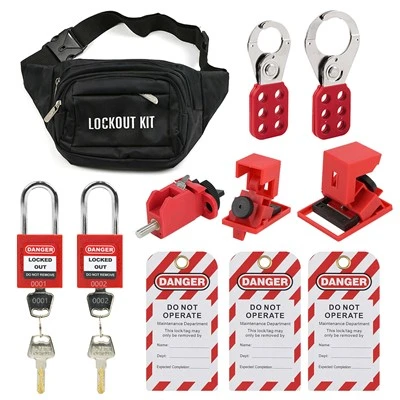
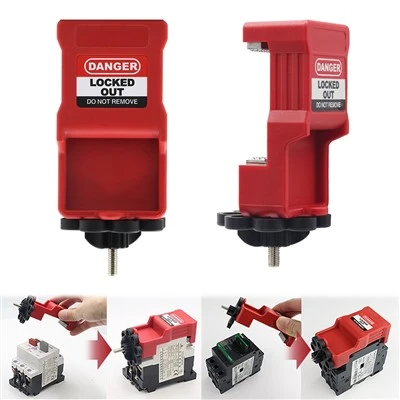
Padlocks and hook locks are two common types of locks. They vary greatly in structure, usage scenarios, security, and operational methods. Here's a closer look:
1.Structural differences
padlock (Padlock
Main structure: made up of lock body, lock beam (U shape or straight rod shape) and lock core.
Core components: the lock beam can be expanded freely, its lock and unlock by the lock core control.
Typical: U-shaped padlocks (such as regular luggage lock) or straight-bar padlocks (such as warehouse locks).
Hash lock (Hasp Lock/Claw Lock)
Main structure: composed of fixed metal plate (with lock hole) and a rotatable hook fastener.
Core component: The hook fastener and fastens to the keyhole of the metal plate and is then secured with a padlock or built-in lock core.
Typical form: lock hook lock (e.g. toolbox lock) or industrial-grade heavy hook lock (e.g. container lock).
2.Comparison of usage
Scenario Padlock applicability Hook lock applicability
Temporary locks are suitable for situations that require frequent opening and closing (e.g. suitcases, lockers, bicycle locks). Suitable for situations requiring long-term fixation and additional protection (e.g. warehouse doors, distribution boxes, industrial equipment).
The environment is adaptable, weather resistance and suitable for outdoor use (e.g. chain locks, fence locks). There is a need for fixed mounting points for structures such as door panels and boxes (e.g. tool boxes and containers).
Multi-lock linkage can be used individually, or multiple people can be authorized through multiple padlocks (such as security lock management). A padlock is needed, but a hook structure can improve protection (such as double locking).
3. Security analysis
Padlocks
Strengths: Simple structure, easy to carry, suitable for quick locking.
Weaknesses: lock beam can be cut (especially soft metal materials) and are less resistant to violent damage.
Hook locks
Advantages: The hook fastener closely combined with the fixed plate, has strong anti-prying and anti-shearing ability, and is suitable for high safety requirements.
Weaknesses: Depends on the strength of the mounting point. If the installation point is damaged, the lock may fail.
4. Comparison of business methods
Padlocks
Lock: Lock the beam through the lock hole with a key or password.
Unlock: Insert key or enter password to release lock beam.
Hook locks
Lock: Rotate the hook fastener into the lock of the fastening plate and then lock it with a padlock or built-in cylinder.
Unlock: Unlock the padlock or built-in lock cylinder, then rotate the hook fastener to release it.
V. Application Cases
Padlock application
Personal belongings: suitcases, backpacks, bicycle locks.
Industrial Scenario: distribution boxes, Valve lock management (LOTO system).
lock application
Warehousing logistics: warehouse doors, container locks.
Industrial equipment: large mechanical shields, hazard area isolation doors.
VI. INTRODUCTION Summary of strengths and weaknesses
Features Padlock Hook lock
High portability (portable) Low (fixed installation required)
Weak damage resistance (lock beam easily cut) Strong (hook-shaped structure resistant to prying and shearing)
Management of temporary locks, personal effects and industrial safety locks
Low cost (simple structure) High (fixed installation point required, complex structure)
VII. How to choose?
Options for padlocks:
Temporary locking needs that need to be opened and closed frequently.
portability requirements (e.g. outdoor, travel).
Budget is limited and cost effective.
Options for a hook lock:
Long-term fixtures and high security are needed.
Locks need to be used in combination with fixed structures such as door panels and box bodies.
Anti-violence destruction requirements are high (e.g. industrial equipment, warehouses).
Abstracts
The padlock and hook locks have their own characteristics in structure, usage scenarios, security and operation method. Padlocks are portable and flexible for temporary lock and personal belongings protection, while hook locks are highly secure and tamper-resistant for long-term fixation and high-risk situations. Choosing the right type of lock for your specific needs ensures a balance between security and ease of use.
 English
- English
- Français
- Deutsch
- 日本語
- Italiano
- Español
- Português
- русский
- Melayu
- Türkçe
- Eesti
- বাংলা
- România limbi
- O'zbek
- Malti
- فارسی
- українська
- dansk
- Svenska
- Indonesia
- Srbija jezik (latinica)
- اردو
- suomi
- Norsk
- Bai Miaowen
- slovenčina
- Nederlands
- íslenska
- bosanski
- Cymraeg
- Latviešu
- Polski
- Gaeilgenah Éireann
- Lietuvių
- Ελληνικά
- slovenščina
- عربي
- ไทย
- 한국어
- Kreyòl Ayisyen
- hrvatski
- हिंदी
- magyar
- Čeština
- Català
- עברית
- Việt Nam
- Български