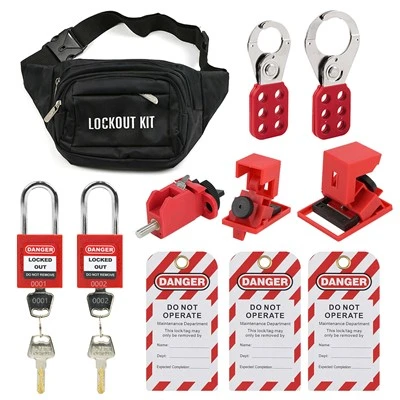
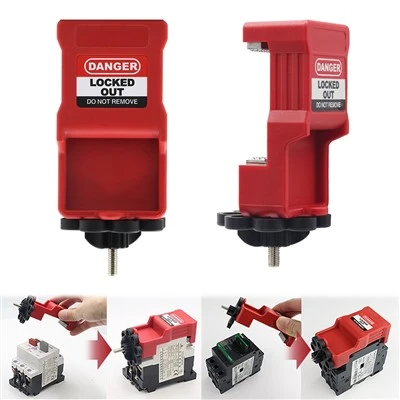
Many within the industry are still exploring how to effectively comply with core legal standards.
When engaging with professionals across various industries-including safety, facilities, and plant managers-a recurring question emerges: What new developments exist in lockout procedures? How can we create a safe, compliant, efficient, and accountable work environment for personnel performing daily lockout operations and managers overseeing organizational safety initiatives?
In short, organizations must adhere to the minimum standards outlined in OSHA 1910.147. While this standard specifies necessary measures to ensure managers clearly understand safety lockout activities (service or maintenance events), it fails to clarify "how" this should be achieved or outline strategies for meeting the minimum requirements.
Without a unified strategy, safety, facilities, frontline employees, and plant managers are left to navigate on their own, resulting in a multitude of approaches to achieving safety, compliance, efficiency, and accountability goals. Since the implementation of the 1910.147 regulation in 1989, many industry practitioners continue to explore how to effectively comply with this core legal standard.
The Evolution of Lockout Procedures
Prior to implementing OSHA standards, the procedural steps and training for shutting down, isolating, blocking, and securing machinery or equipment to control hazardous energy were conveyed solely through verbal communication among on-site technicians. These practices lacked formal written documentation for reference. This approach created significant challenges in tracking and maintaining procedures from a safety compliance perspective, as well as in holding employees or the entire organization accountable.
Since the implementation of Standard 1910.147, organizations have been required to establish written procedures ensuring that all equipment undergoing maintenance and possessing multiple energy sources achieves a zero-energy state. Today, written lockout procedures have evolved from handwritten paper documents to computerized digital formats, facilitating creation and modification.
Current methods of creating lockout procedures through software or applications allow personnel to conveniently identify isolation points by selecting preset hazardous energy types, energy level measurements, and required lockout device types, thereby ensuring equipment reaches a zero-energy state. These digital procedures can be printed or generate QR codes linking to the procedure, which are posted at equipment access points for authorized personnel to reference.
Through the application of digital procedures, lockout software establishes an accountability mechanism for authorized personnel. This requires not only adherence to corporate safety policies but also compliance with the 1910.147 standard. This ensures procedures undergo continuous review, remain up-to-date, and are readily accessible to employees at all times.
Linking authorized personnel to written procedures through lockout devices
Safety, facility, and plant managers can foster a safe environment through training, incentive programs, standardized documentation of policies and procedures, and disciplinary measures when necessary. While these strategies effectively enhance an organization's safety record, they cannot guarantee with absolute certainty that authorized personnel will consistently perform the required procedures to de-energize equipment to zero energy state before maintenance or repairs.
To truly achieve a higher level of accountability and establish a tighter link between authorized personnel and lockout procedures, the only effective approach is to adopt digital locks or locking devices. Today, this newly developed networked lockout software ensures a virtual connection between authorized personnel, safety locks, and written procedures, guaranteeing that all lockout operations are documented in real time or retrospectively. Essentially, networked lockout technology bridges traditional written protocols with modern technology, enabling accountability for lockout actions.
The core principles and value of lockout management remain constant-ensuring authorized personnel safety by achieving a zero-energy state-but the means to achieve this goal will continually evolve.
The digital nature of interconnected lockout processes offers organizations enhanced safety and improved accountability. Recognizing and leveraging these new safety tools across the industry allows us to strengthen accountability and boost efficiency by understanding when and why equipment is locked out.
HiLink is your one-stop safety lockout tagout solution expert!